

Blog / Divorce

Achieving a Diplomatic Divorce

Diplomatic Divorce Amicable Uncontested

You probably already know this, but divorce is never easy. Despite what you see in films and television, love and marriage aren’t always forever, and very rarely is a divorce a mutual endeavor. One side is inevitably going to be hurt by the other’s decision to leave. This does not mean, however, that a divorce has to be contentious. Anger, resentment and grief are all acceptable emotions when learning your spouse wishes to end your relationship; having the strength to manage these feelings in a courteous and objective manner can go a long way in diplomatically ending your marriage and moving forward with respect and dignity.

What is a Diplomatic Divorce?

A diplomatic divorce is an amicable divorce in which both parties agree to negotiate in good faith and without malice, coming to reasonable terms for child and spousal support, and division of assets without having to face a judge. This is also known as an uncontested divorce.

What You Should Know When Beginning a Diplomatic Divorce

  • Never focus on who may or may not be at fault; this is irrelevant. Placing blame or punishing your spouse will simply lead to additional anger and resentment. Instead, treat your divorce as a business traction — You had signed a contract to build a life together and now one partner wants to leave the company. This will help you focus on the positive as opposed to the negative.
  • Figure out what is most important to you (not everyone around you) and set realistic goals and expectations with your spouse.
  • Try not to squabble over semantics; if your spouse pushes buttons, take time to breathe before answering. Reasonable disagreements will occur; how you handle these disagreements is what will define whether the divorce is amicable or contentious.
  • If you have children, keeping the proceedings civil will help them become more accustomed to their new lifestyle. It also allows for much more bearable custody arrangements.
  • Being diplomatic and respectful does not mean that you and your spouse will ever be friends, nor does it mean you have to like the decision. It simply means you understand your spouse’s decision and love them enough to let them leave peacefully.
  • It also does not mean you won’t feel hurt or need time to grieve. Moving forward amicably allows for a much quicker resolution and reduces the amount of time, stress and money that you must pour into the divorce.

Some parties may wish to have a pro se divorce, which means each party handles all paperwork and arguments in a fair and amenable manner; others may need to acquire lawyers to handle all of the communication between the parties. Either way is perfectly acceptable. If you choose pro se, decide if you would like, or are required, to have a mediator to help resolve issues fairly; if you choose to hire attorneys, make sure both of them understand you want to end the marriage quickly, peacefully and amicably.

Posted in:

Related Posts

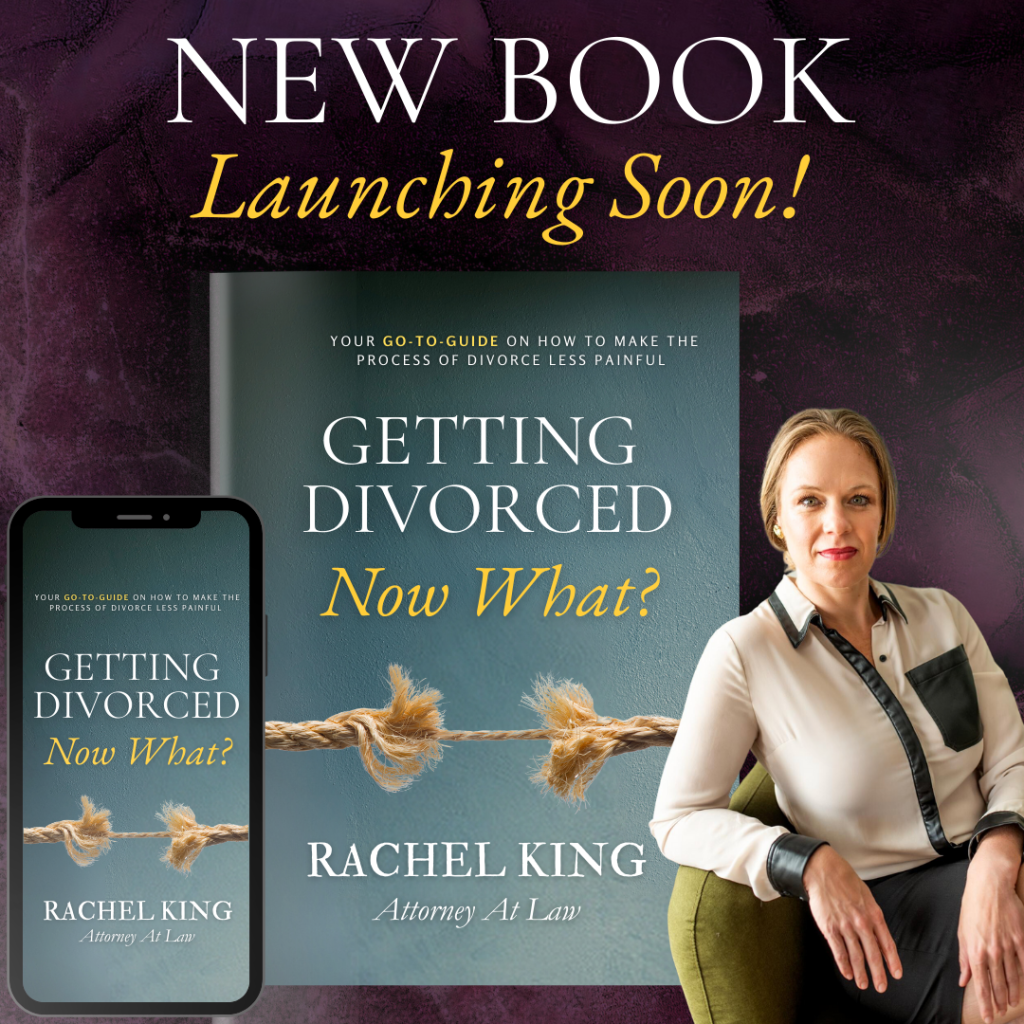
Rachel King Book Launching - King Law Firm Inc. Getting Divorced… Now What? A Q&A with Attorney Rachel King

Getting Divorced… Now What? A Q&A with Attorney Rachel King

Rachel King, lead litigation attorney at King Law Firm Attorneys at Law, Inc., has a new book being released soon. We talked to Rachel about the book, Getting Divorced... Now What? and the challenges one might face when representing themselves during divorce. 1. What is Getting Divorced… Now What? It is everything I have learned over a decade of practicing litigation. It is my attempt to share the inside scoop on divorce in a way that is helpful for individuals facing divorce, which includes case studies, general legal information, tips and tricks—all written without legalese. 2. What Inspired you to write the book? I found that the expectations clients have in a divorce vary hugely but are also unrealistic when compared to the law and are often driven by emotion. This can cause a person to get completely off track and make their case worse. I wanted to share a different perspective, one that many people never get (details attorneys feel are unpopular) attorneys feel the or have to pay a lot of money for (hiring their own attorney). 3. How did you choose the real-life stories included in the book? I’ve watched thousands of people in court—I’ve seen it all. So, I looked at a lot of common scenarios and tried to pick situations that are most likely to be encountered or that illustrate a specific issue in the best way. My goal is to share stories that show ‘you are not alone’ while bringing credibility to the information I am sharing. Of course, the real-life stories included in the book are only based on people and families; the details and the players in each one have been changed. 4. Do the stories offer a comprehensive look at the challenges faced during a divorce? I definitely had to balance comprehensive with taking people down the rabbit hole. (Believe me, I could have written an entire series—and maybe I will!) My goal is to be a helpful resource, not a law school course. Therefore, I focused on what I considered the most common issues, and concepts that are misunderstood, or unpopular realities that no one is talking about in divorce. 5. In your opinion, what is the most influential real-life story in the book? I love the stories that share empowerment. Divorce is hard. Showing that people can have a successful outcome through divorce is important; or maybe even better, can have a successful post-divorce life even if they lose. I really want to show people that the law is different than the dream. Understanding that early can make the process more tolerable. 6. What are some common misconceptions when representing yourself in a divorce? Hands down—that you get special treatment because you don’t’ have an attorney. Not the case. The court may be more patient, but you will be held to the same standards as the attorney sitting across the table from you. This is most difficult when it comes to presenting a case in trial and getting in evidence. 7. What are the top three mistakes people make when representing themselves in a divorce? Making decisions in their own case based on what happened to their friend. Not taking the time to understand the law. Thinking you get special treatment and that the court will let it slide just because you are representing yourself. 8. Does Getting Divorced… Now What? Help readers understand the financial implications of divorce, both during and after? There is definitely discussion about dividing assets, debts, and child and spousal support. Because, let’s face it, divorce causes financial upheaval. But fear not; this is not an economics class, and you don’t have to do math. 9. How can Getting Divorced… Now What? mentally prepare someone for divorce (and to represent themselves through the divorce)? It gives a global understanding of divorce, which can be used as a starting point when preparing for divorce, but it can also be used throughout the process to help focus and review your case so that you remember what you are fighting for. The reality is that goals are going to change throughout the process—and even after—so revisiting this can be very helpful. 10. What was your strategy for putting together the workbook that goes along with Getting Divorced… Now What? The amount of information needed in a divorce can be daunting. The goal of the workbook is to create a free space that can help organize information so that you can look at what the real issues are, what your goals are, and what the argument is. I wanted to provide a space that could be easily accessible and hopefully provide confidence in an otherwise overwhelming and paralyzing process. 11. What is the most surprising thing you learned while putting the book (and workbook) together? It is a lot of work! The biggest challenge was trying to include important and helpful information without it turning it into a dissertation or encyclopedia. It was very hard to say “OK Rachel. It is OK to stop now.” I could have gone on forever. 12. What is you’re the most important piece of advice you can give someone representing themselves in a divorce? Prepare properly. Properly being the operative word. Sign up to King Law Firm’s newsletter to get notified when Getting Divorced... Now What? goes on sale. For more on divorce, check out these posts: 5 Factors to Consider When Representing Yourself in a Divorce Summary Dissolution – Simplified Divorce in California California Divorce in 6 Simple Steps — A Primer

pro se - representing yourself in a divorce gold rings on top of a decree

5 Factors to Consider When Representing Yourself in a Divorce

Complexities aside, representing yourself in a divorce should always be a last resort. We understand not everyone can afford a high-priced attorney, but the inability to separate one’s emotions keeps a lot of people from logical, rational discourse, which inevitably leads to an outcome that’s skewed in the spouse’s favor. However, if you must act pro se (‘pro•say’; meaning to act as your own attorney), consider these five factors. 1. Do Your Research Not all online forms, do-it-yourself guides, and resources are created equal. If you choose to act pro se, do plenty of research into every facet of the process. Legal Terms: You will need to be familiar with many legalities throughout the process, the most important being ex parte (ex•par-tay) communications. These are unsolicited documents, calls, or visits with the judge or clerk, or communications that weren’t transmitted to the opposing attorney. Following the Law: Though some judges are more lenient when representing yourself, they still expect you to follow the law. Be aware of deadlines, courtroom etiquette, correct filing, and rules of evidence. Claiming you didn’t know is never a viable excuse. Communicate: Failing to meet deadlines or respond to paperwork, will always be your fault and may result in a default judgement. Make sure the court, administrator, and spouse’s attorney all have your most recent home address and a professional email account. 2. Custody and Property Representing yourself poorly may affect custody, visitation, support, and property received. Custody: It’s important to know the difference between physical and legal custody, and sole vs. joint custody. You should also understand that agreeing to custody arrangements without considering modification could keep you from changing them in the future. Property Division: It may seem easy enough, but real property has a lot of unknown secrets. For example: if you take your name off the title of your home but not the mortgage, you may still be responsible for payments should your spouse fail to pay. Take this into account for credit card debt and car loans as well. 3. Accessing documents from your spouse How do you subpoena documents? Not knowing how or what documents to collect could lead to mishandled evidence, late filings, and incomplete paperwork. 4. Stay Away from Social Media Social media during a divorce is not your friend. Every post you make, no matter if it’s hidden, may be admitted as evidence. 5. Attorneys cannot provide unsolicited legal advice Some attorneys provide free consultations, but this doesn’t mean they provide free legal advice. Nor does the opposing attorney have an obligation to assist you in any way. Limited Scope Basis: Attorneys may provide this type of representation, in which you pay a small fee for specific tasks, such as filing paperwork. In summary, when acting pro se in a divorce, do plenty of research, stay on top of paperwork, understand the ins and outs of custody and property arrangements, stay clear of social media, and identify all laws required of your state and county.

rumors of divorce two young women spreading rumors in front of a decorative door

Schrodinger’s Divorce – Are Ben Affleck and Jennifer Lopez Calling It Quits?

Screenshot Rumors have been swirling around Hollywood that Ben Affleck and Jennifer Lopez’s marriage is all but over. It started May 17 when Lopez attended the Met Gala alone one day after the two were spotted together at Affleck’s son’s school play. His absence could very well have been due to scheduling obligations on his new film, but that didn’t stop In Touch Weekly from firing the first shot of turmoil. So, how did we get here? When the Romance Started Affleck and Lopez first met in 2002 on the set of Gigli. The movie may have bombed, but their love affair became a blockbuster of epic proportions. So much so, they were labeled “Bennifer”, igniting the trendy pop-culture-name mashup craze. The hottest couple around was engaged later that year, but the spark soon fizzled. After calling off their 2003 wedding (supposedly because of “excessive media attention”), their separation became official in January 2004. Both seemed to move on quickly, though. Lopez married Marc Anthony in 2004; a year later, Affleck married his new girlfriend, Jennifer Garner. Relationships Crumble Lopez and Anthony were the first to call it quits, ending their marriage in 2014. Affleck and Garner lasted another four years before their divorce was finalized in 2018. Both then moved on to new suitors for a brief period. But as Affleck’s flirtation with Ana de Armes fizzled and Lopez’s engagement to baseball phenom Alex Rodriguez ended in 2019, the door was finally open for Affleck and Lopez to rekindle their tabloid flame. A Second Chance at Love The Bennifer hurricane swept through the rumor mill once again when Affleck and Lopez separately attended the Vax Live concert. They were then spotted together several times over the next few months. Their newfound love quickly flourished into another engagement, this time culminating in marriage at a 2022 Las Vegas ceremony at the A Little White Wedding Chapel. What About Their Kids? Even though Affleck and Anthony only have visitation rights to see their kids, both Affleck and Lopez share joint legal custody with their respective exes, and all parties feel the same when it comes to the health, safety, and education of their children. An US weekly source has stated, “They have a mutual respect for each other as parents and know how well all their kids get along. They want to foster and nurture those relationships and will do whatever it takes to show their support.” What now? Neither Affleck nor Lopez has confirmed or denied these rumors. That hasn’t stopped sources from revealing the couple doesn’t see eye-to-eye on parenting and finances, nor does it negate the fact that Affleck has moved out of their home. It doesn’t help, either, that Lopez canceled her This Is Me… Live tour, citing the need to spend more time with her family to be “absolutely necessary.” This still isn’t enough to know if the marriage is over. Until an official announcement is released, we can assume this is nothing more than a Schrodinger’s cat situation — Affleck and Lopez are both happily married and filing for divorce.