Blog / Business

Do California's New 2018 Laws Affect You?

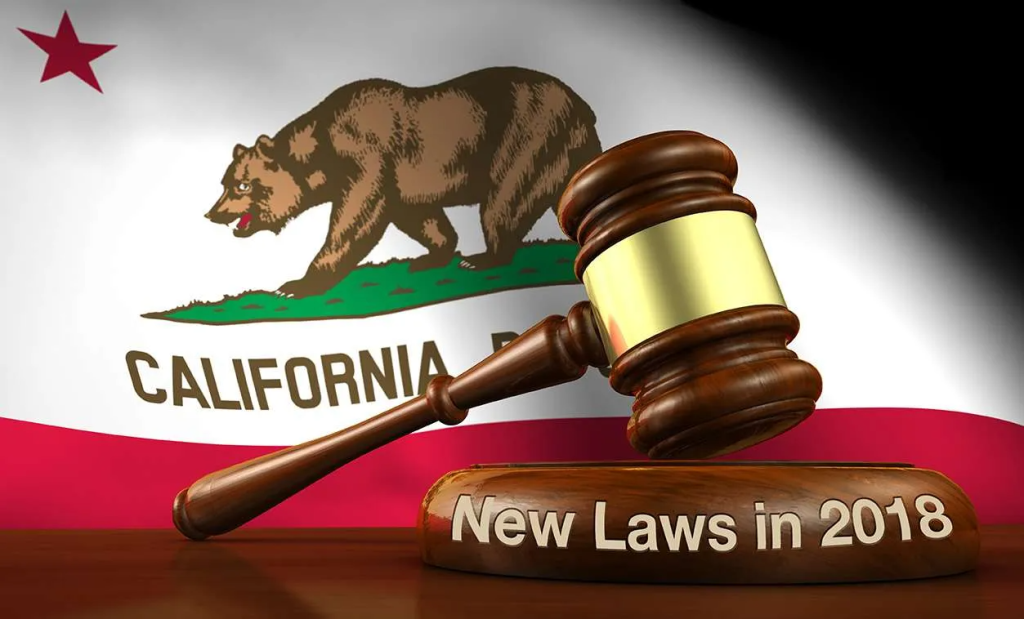
California's New 2018 Laws
New laws are coming in 2018. Which ones may affect you?

Did you know before this year it was illegal to enter a crosswalk after the “Don’t Walk” symbol begins flashing? With over 900 bills signed into law last year, it’s nearly impossible to know what is and isn’t legal. The majority of laws going into effect this year won’t affect most of our daily lives, but there are a few everyone should know.

Many sanctuary state laws will be taking effect.

  • Police may no longer ask a person’s immigration status.
  • Immigration officials must present a warrant to access employee records.
  • Universities and businesses are prohibited from cooperating with federal immigration officials.
  • Landlords may not report illegal renters.
  • State agencies and officials who work with children do not have to report immigration violations.

Recreational marijuana is legal. What you may not know is:

  • It’s illegal to smoke or have any open containers of marijuana while driving, or to drive while under the influence of marijuana.
  • You must have a state-issued license to sell recreational marijuana.

Business owners will see some major changes.

  • Minimum wage rises to $10.50 or $11 based on the number of employees.
  • Employers must offer up to 12 weeks of unpaid maternity leave.
  • Employers may not ask an applicant about their salary history or perform a background check until after an official employment offer has been presented.
  • Sexual harassment training must include gender identity and sexual orientation harassment.

Schools and Universities will change in varying ways.

  • Children may no longer be denied meals if their parents fail to pay their fees.
  • Free tampons must be provided to junior and senior high students attending schools where poverty-level students make up at least 40% of the class.
  • The high school exit exam has been eliminated.
  • Per-unit fees will be waived for first-year students attending community college.

LGBT laws continue to expand.

  • A “non-binary” status option will be available for all state documentation.
  • It will be illegal for long-term care facilities to discriminate based on gender identity or sexual orientation, or repeatedly fail to use a resident’s preferred name or pronoun.

Gun regulations ramp up.

  • All ammunition must be bought or transported across state lines through a licensed dealer.
  • Gun owners convicted of a felony must turn over all firearms.
  • Anyone convicted of a hate crime will be unable to purchase firearms for 10 years.
  • A serial number must be purchased from the state for every home-made weapon.

A few safety and environmental measures will also take effect.

  • Incandescent lightbulbs will no longer be shelved.
  • Public venues undergoing heavy renovations will be required to include a baby changing table in men’s bathrooms.
  • Drivers with certified medical conditions may tint their windows.

And finally, some local and state issues.

  • Neighborhood polling places will be closed in favor of mail-only elections.
  • Vehicle registration will rise between $25 and $175 depending on the value of the vehicle.
  • Pharmaceutical companies must give advance notice before any large rise in costs.

Posted in:

Related Posts

mediation in wga sag aftra writers actors strike hollywood

Mediation Needed in the Hollywood Strike

Hollywood has been at a near standstill since July 13 when the Screen Actors Guild/American Federation of Television and Radio Artists (SAG/AFTRA) union joined the Writers Guild of America (WGA) on the picket lines. You may recall that members of the WGA originally went on strike against the Alliance of Motion Picture and Television Producers (AMPTP) on May 2, when negotiations over working conditions on streaming productions, compensation, better insurance coverage and residuals for union members, and protections against the use of A.I. failed. Most recently, the AMPTP brought forth a compromise, one they believed was fair but which the WGA felt had far too many loopholes, omissions, and limitations. They believed the meeting was not setup in good faith and was only conducted to push the union to cave. It’s nearly four months in, and neither side is willing to compromise. This is the perfect time for mediation. Why meditation? Mediation is effective in its ability to resolve disputes. By merging ideas through an independent third party, both sides can be heard and work together to find a respectable resolution. Benefits of mediation Save time. Mediation can often be handled in hours, if not days. Many people and businesses that are not part of these unions, such as food services, equipment rentals, artists, hair stylists, lighting technicians, and camera operators to name a few, are also being adversely affected by these strikes. Mediation could help bring a swift end to a strike that has no end in sight. Improve communication. Mediators are not there to decide right from wrong. They are trained to find a solution that benefits both sides. With the WGA and the AMPTP, one side seems to be looking to gain all benefits without giving any to the other side. Choosing mediation would allow a mediator to facilitate an honest discussion and weed through all the noise, avoiding a win-lose or lose-lose situation. Agreements that close legal loopholes. A mediator can help guarantee there are no legal loopholes or omissions during negotiations, helping both parties feel they are being protected. Preserve working relationships. Negotiations can lead to sour grapes between people and businesses that were once cordial and friendly. Mediation helps both parties come away from a contentious negotiation with renewed respect for one another. In the case of the WGA, SAG/AFTRA, and the AMPTP, this could help create a path forward for good faith contract negotiations moving forward. Why haven’t they already tried mediation? If one side isn’t willing to reach a compromise, there really is no point. And no person or business can be forced into mediation. So, unless the WGA and AMPTP both agree to find a compromise, mediation wouldn’t work properly. However, with a near 75% success rate, the WGA, SAG/AFTRA, and the AMPTP would gain substantial ground in their negotiations by agreeing that mediation was the best path forward to getting everyone, union and otherwise, back to work.

inflation affects you dollar decreases

How Is Inflation Affecting You (and Your Business)?

Inflation. Yeah, we all feel it. From the gas station to the grocery store, everywhere we go, everything we pay for, rising costs hit us over and over like a school yard bully. Not all industries are affected the same, but all feel the weight of inflation in cash flow, supply-chains, profitability, and most importantly, purchasing power. But how much does inflation affect us? Inflation — or the rate at which prices increase over time in relation to the amount of currency in circulation — affects everyone differently depending on the industry and our buying habits. To put it in its most basic terms: if a dollar could buy one dollar worth of goods and services yesterday, today it only buys ninety cents worth of goods and services. So, what happens when the rate of Inflation rises? Businesses raise costs or reduce the size of its products Businesses need to make profits to survive. As the cost of raw materials, import and export rates, and overhead rise, businesses must offset this cost to maintain that profitability. One way they do this is pass the cost on to us (also called “cost-push” inflation). That’s why we see prices go up, either directly through price points or indirectly through reduction of the amount of product sold. Businesses reduce staff or close. Other ways businesses maintain profits is by removing poorly selling goods or reducing staff. When high inflation first begins, workers may see a rise in wages. However, if the inflation rate continues to rise, paying employees becomes a burden, leading to reduced hours and layoffs. When prices get too high, and profits dwindle or become non-existent, there is no other recourse than to close their doors. Interest rates rise The main tool to fight inflation is higher interest rates because it makes borrowing money more expensive. Though this helps in reducing the value of old debt, we are less willing to use credit or make big ticket purchases when interest rates are too high. This leads to — Buying less goods and services We all prioritize our essential needs over what we want. As our purchasing power dwindles, purchasing that new car, buying that new couch, or spending the same amount on Christmas gifts may not be in the cards. We also look harder for sales and buy in smaller quantities to make ends meet. We choose to do it ourselves Non-essential services, such as hiring a housecleaner or paying for an attorney, are set aside in favor of doing it ourselves. The extra expense just isn’t necessary in most cases. Overall behavior changes In the end, as the rate of inflation rises, all of us change or habits and behavior. Though loyalty plays a big part, most of us would rather spend $50 on three days of meals than one meal at a restaurant; businesses would rather diversify their vendors than rely on just one; and restructuring priorities and processes becomes a priority.

kids holding signs that say free Britney sitting on a small wall boycotting California court proceedings

SPECIAL BLOG! What do Brittany Spears, Steve Jobs, and Charles Manson have in common?

Celebrity status is likely to be the first choice pick. Spears, Jobs, and Manson are household names recognized across the United States, and even internationally. Somewhere on the list of commonalities, these infamous beings also share the experience of being involved in California court proceedings; more specifically cases involving the control of their person. #FreeBrittany Brittany was the subject of a California conservatorship case for over 13 years where her father, Jamie Spears, was granted the legal authority to make decisions over Brittany’s every move including who she dated and what her text messages said. Jamie’s decisions were controversial at best and more likely an abuse of power, resulting in the #FreeBrittany movement. In 2021 Spears was finally granted her freedom. #Apple Steve is best known for #Apple. But far before changing the trajectory of technology, Jobs ended up going through California court dependency proceedings when his mother gave him up at birth. Fortunately for Steve, his foster experience sent him to live with his soon-to-be adoptive parents. #MansonFamilyCult Charles, may not be liked nearly as much as Spears and Jobs, but his California court experience received more notoriety than both of them combined. Manson is best known as the mastermind behind the #MansonFamilyCult; a cult responsible for numerous murders and deaths. Interestingly, after his death, family members and potential heirs went to battle over his remains and his stuff. Fighting For Your Rights Most of us are not going to become founders of the next #imac, or #superstar, and hopefully, we won’t have another #deathcult developing. Celebrity or not, one thing we all have in common: we know someone suffering from dementia, a child without parents, or a family member battling for their inheritance. We know someone fighting to protect their rights in the California probate system. Brittany Spears, Steve Jobs, and Charles Manson didn’t plan on being the subject of California court proceedings. I venture to say, that none of them thought control of their person would be in the hands of a judge. Your Best Advocate I may not have much in common with Manson, ideas as innovative as Jobs, or the ability to entertain like Spears, but I know that if I end up being the subject of a California probate court proceeding, I want an advocate on my side that will fight for me, and ensure that my voice is heard. © Rachel King 2022