Blog / Books

Getting Divorced… Now What? – Buy It January 15th, 2025

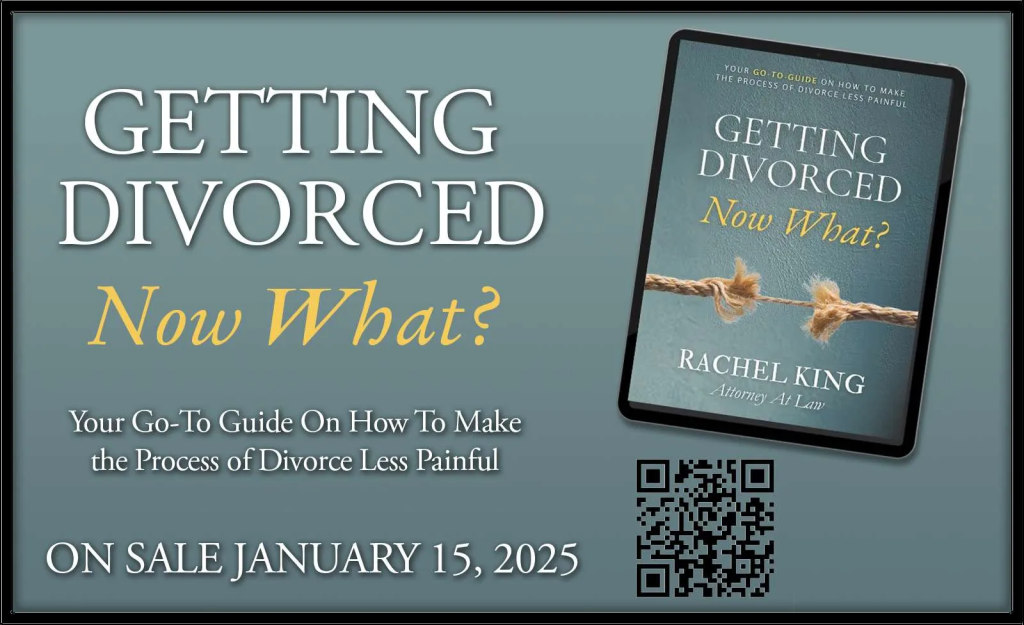
Getting Divorced... Now What? advertisement with book cover and QR code announcing sale on January 15, 2025

“When faced with the question of whether you should stay in a marriage, difficult emotions are bound to arise…. Despite the emotions involved, a life-changing decision needs to be made when considering the financial, emotional, and legal implications specific to your situation. The first question you should ask is: ‘Should I file for divorce or repair my marriage?’.”

Thus begins Getting Divorced... Now What?, a new go-to guide on making the process of divorce less painful.

Life And Expectations Change

No one expects they will be heading for divorce when they say yes to a proposal from someone they deeply love. But life, growth, and experience inevitably change people, and if one’s spouse is unable to accept those changes, divorce also becomes inevitable. Whether the divorce is amicable or catches one party off-guard will determine how complicated and emotionally devastating this life-changing event becomes.

Getting Divorce… Now What

Written by family law and litigation attorney Rachel King, Getting Divorced... Now What? explores the many complexities of divorce. Her main goal in writing the book was to compile what she’s learned over ten years of representing and witnessing thousands of family court cases into a compassionate, relatable roadmap for those who may not be able afford an attorney. It provides the tools necessary for anyone contemplating divorce—or in the midst of one—to confidently navigate the rigors (emotional and legal) of divorce and simplify the complicated chapter of their life.

Real-Life Stories

One key element of Getting Divorced… Now What? are real-life anecdotes and stories that offer a sense of relief, letting them know that they are not going through their divorce alone.

Here’s a quick excerpt of one story (names and facts have been altered to protect the individuals involved):

“Meet Sarah and John: They live in the heart of a bustling city, amidst the chaotic rhythm of life. They married at 23 years old, right after college, deeply in love, and quickly started their family. Now, thirteen years later, life is taking its toll on their marriage…. She finds herself overwhelmed, and her marriage is feeling the brunt of it. She is torn between wanting to save the marriage, or realizing that maybe it's too late, and it’s time to move on. A lot has happened over fifteen years. She is exhausted and not sure if she is emotionally willing to invest another day in her marriage.…. Their journey began like a fairy tale, with stolen glances, and promises of forever. Yet, as time and life unfurled its complexities, cracks began to form in the once-solid foundation of their marriage. Sarah, with her heart heavy with burden, finds solace in the silent confinements of her therapist's office. Should she stay or should she go?”

You Are Not Alone

With many anecdotes, stories, and practical and authoritative information from Rachel King’s ten years of experience, by the time you’re done reading Getting Divorced… Now What?, you will no doubt believe “You are not alone, and you will survive!”

Take your first step towards healing and empowerment by checking out a  free chapter of Getting Divorced… Now What?

And look for the book when it’s released on January 15, 2025.

Get answers to all of your burning questions about Getting Divorced… Now What?


Disclaimer: Getting Divorced… Now What? is not a replacement or substitute for legal advice. You should speak with an attorney in your jurisdiction to get legal advice on your case. The book is not legal advice and is not intended to be legal advice. The book is for informational and entertainment purposes only. Buying, reading, or otherwise using this book does not establish an attorney-client relationship, nor does it constitute legal advice.

Posted in:

Related Posts

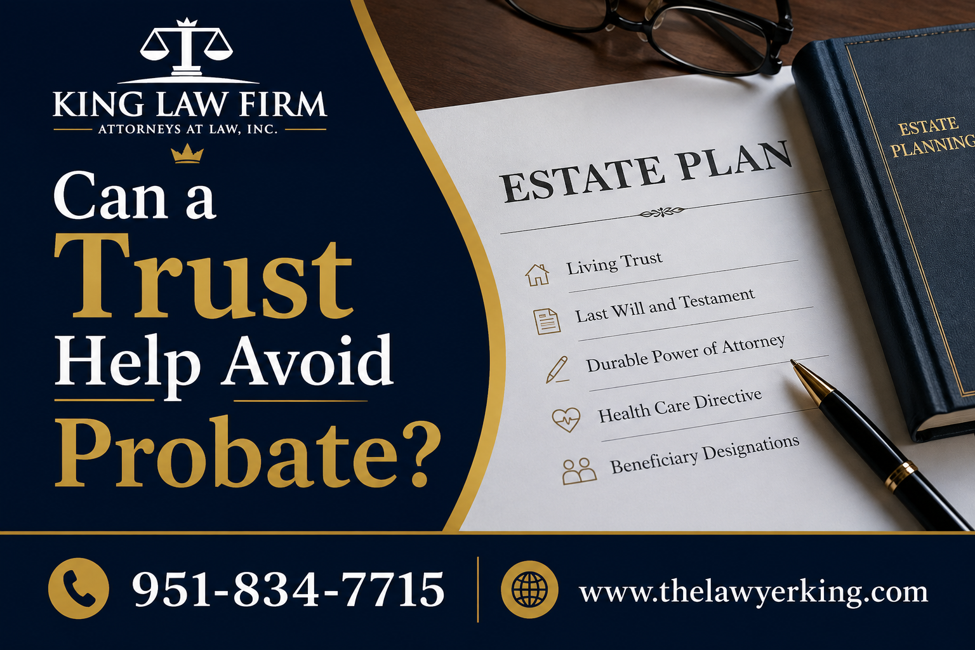
Can a Trust Help Avoid Probate in California?

Yes, a properly created and funded trust can help certain assets avoid probate in California. For many families in Wildomar and throughout Riverside County, a revocable living trust can be an important estate planning tool because assets held in the trust can generally pass according to the trust's instructions without going through the traditional probate process. However, simply creating a trust is not enough. Assets generally must be properly transferred into the trust for the trust to accomplish its intended purpose. If you have questions about a trust, probate, trust administration, or a dispute involving trust assets, King Law Firm Attorneys at Law is located at 34859 Frederick Street, Suite 108, Wildomar, CA 92595. Call 951-834-7715 or contact King Law Firm Attorneys at Law to discuss your situation. more How Can a Trust Help Avoid Probate? Probate is the court-supervised process that may be used to administer assets remaining in a deceased person's estate. Whether probate is required depends on factors including how assets were owned, their value, beneficiary designations, and the estate planning documents in place. A properly funded living trust works differently. When assets are transferred into a trust, legal title to those assets is held by the trustee according to the terms of the trust. During your lifetime, you may serve as trustee of a revocable living trust and continue managing the trust property. You can also name a successor trustee who can take responsibility for administering the trust after your death or if circumstances described in the trust require a successor to act. Because property properly held in the trust does not need to be transferred through a will at death, those assets can generally be administered outside of probate. Creating a Trust Is Only Part of the Process One of the most important aspects of using a trust for probate planning is funding the trust. Creating and signing a trust document does not automatically place all of your property into it. Depending on the type of asset, additional steps may be necessary to transfer ownership or otherwise coordinate the asset with the estate plan. For example, real estate intended to be held in a trust generally requires appropriate documentation to transfer title to the trustee of the trust. If an asset remains individually owned at death without another method of transfer, the existence of a living trust alone does not necessarily prevent that asset from becoming part of a probate estate. For questions about how a trust may affect probate in California, call King Law Firm Attorneys at Law at 951-834-7715 or request a consultation online. Types of Trusts Used in California Estate Planning There are many types of trusts, and each serves a different purpose. Two broad categories people commonly encounter are revocable and irrevocable trusts. Revocable Living Trust A revocable living trust is commonly used as part of an estate plan. As the name suggests, a revocable trust can generally be amended or revoked by the person who created it while that person is living and has the legal capacity to make those decisions. The person creating the trust may also serve as the initial trustee, allowing that individual to continue managing property placed in the trust. The trust can provide instructions concerning: Who will serve as successor trustee How trust assets should be administered Who should receive property after death When and how beneficiaries receive their distributions How certain property should be handled if the creator becomes incapacitated When assets are properly titled in the trust, the successor trustee can generally administer those assets according to the trust rather than transferring them through probate. Irrevocable Trust An irrevocable trust generally provides substantially less flexibility than a revocable living trust. Depending on the type of irrevocable trust and its terms, the person establishing it may give up significant rights or control over the transferred property. Irrevocable trusts may be used for specific estate planning, asset-management, tax, or beneficiary-related purposes. They should not be viewed simply as a "better" version of a revocable trust. Whether an irrevocable trust is appropriate depends heavily on the circumstances and objectives involved. Does Everything in a Trust Automatically Avoid Probate? No. The important question is not simply whether someone has a trust. It is whether the relevant property was properly transferred to or otherwise coordinated with the trust. This is why periodically reviewing an estate plan can be important. Someone might establish a living trust and later purchase a home, open financial accounts, acquire investments, or receive other property without considering how those assets fit into the existing plan. When property is left outside the trust, additional procedures may be necessary after death. What About Assets With Named Beneficiaries? A trust is not the only way property can potentially transfer outside probate. Certain assets may pass through beneficiary designations, survivorship rights, or other legally recognized transfer mechanisms. The correct approach depends on the particular asset and how ownership and beneficiary designations are structured. An effective estate plan therefore involves more than simply preparing a trust document. The trust, property ownership, beneficiary designations, and other estate planning documents should work together. Why Should a Trust Be Reviewed? Estate plans should not necessarily remain untouched for decades. A review may be appropriate following significant personal or financial changes, such as: Marriage or divorce Birth or adoption of a child Death of a beneficiary or trustee Purchase or sale of significant real estate Major changes in financial circumstances Acquisition of substantial new assets Changes in family relationships or planning priorities Changes in California law may also affect estate planning considerations over time. A review provides an opportunity to determine whether the trust still reflects your wishes and whether assets have been properly coordinated with the plan. What Happens After the Trust Creator Dies? Avoiding probate does not mean that nothing has to happen after death. A successor trustee generally has responsibilities associated with administering the trust. Depending on the circumstances, these duties can include identifying and safeguarding trust property, reviewing the trust's instructions, communicating with beneficiaries, addressing debts and expenses, maintaining appropriate records, and ultimately distributing assets as directed by the trust. Trust administration can also lead to disagreements. Beneficiaries may question a trustee's decisions, distributions, accounting, handling of property, or interpretation of the trust. Trustees may also encounter disagreements among beneficiaries or uncertainty concerning their responsibilities. King Law Firm Attorneys at Law handles trust litigation matters involving trustees, beneficiaries, trust administration, and disputes over trust assets. If you are involved in a trust dispute or have concerns about how a trust is being administered, call 951-834-7715 or contact King Law Firm Attorneys at Law. Can a Trust Guarantee That Probate Will Never Be Necessary? No estate planning document should be treated as an absolute guarantee that probate will never be required. Whether probate or another court procedure becomes necessary depends on the assets involved, how they were titled, their value, applicable California law, and the circumstances existing at the time of death. A properly established and funded trust can nevertheless be an important tool for reducing the amount of property that may otherwise have to pass through probate. Talk With King Law Firm Attorneys at Law in Wildomar, CA Trust and probate issues can become complicated when property ownership, beneficiary rights, trustee responsibilities, or family disagreements are involved. King Law Firm Attorneys at Law is located in Wildomar, California, at: King Law Firm Attorneys at Law 34859 Frederick Street, Suite C Wildomar, CA 92595 If you have questions involving a trust, probate matter, trust administration, beneficiary rights, or trust litigation, call 951-834-7715. You can also contact King Law Firm Attorneys at Law online to request a consultation. This article is intended for general informational purposes and does not constitute legal advice regarding a particular estate, trust, or probate matter.

Person questioning a lawyer for to contest a will

Contest a Will in 4 Steps

Your father just passed away. You’ve said your final farewell at the funeral, but then realize this is only the beginning. It’s now time to start the arduous probate process. Emotions are already running high, but now you’ve realized there’s something wrong with the will your father left. As a beneficiary who was expecting to receive part of the estate, it’s hard to believe you’ve somehow been excluded. Is there anything you can do? Yes, but you must follow strict rules and guidelines to contest a will. What to Have for Contestation You first need to confirm you are an interested pIf youarty—a beneficiary, a creditor with a valid claim, or legal heir determined by intestacy laws if there is no will—with legal standing to contest a will. This means arguing undue influence, improper execution, fraud, or revocation was involved. In other words, you must seek to prove one of the following: The testator (or the person who drafted the will) did not have the mental capacity (was not of sound mind, meaning they did not understand what they own, the value of each item, and who their natural heirs are) to draft or sign the will in question. The testator was manipulated, coerced, or forced under duress into drafting or changing parts of the will. The testator was deceived in some way to change or omit beneficiaries. There weren’t proper witnesses. The signature was forged. An earlier draft was submitted to probate. You have a strict deadline of 120 days from the start of probate to contest a will if you haven’t already objected to the initial probate hearing. Contesting the Will First step, notify the probate court and the estate of your intention by filing a petition. Next, gather the evidence you need to contest the will. Evidence includes, but is not limited to, a different version of the will, medical records, and witness testimonies. If you have objected to the initial hearing, this will you give you additional time to gather the evidence. Once you have the evidence needed, you will enter it into discovery. Witnesses will then be deposed, and you will go to mediation to remedy the situation through a neutral third-party. If the contestation cannot be resolved through mediation, you will then go to court and present your case to the judge. Costs and No-Contest Clauses If you contest a will, it may cost upwards of few thousand dollars (includes court and filing costs and attorney fees) and could take years to conclude. This is one reason why you want to have a solid case before attempting to contest a will. Another reason is when a will has a no-contest clause. If it does, and you lose the case, you can also lose all the inheritance you would have been subject to. If you have any questions about your rights as a beneficiary, check out our Guide to Beneficiary Rights and then contact a reputable probate attorney.

8 important terms to know when becoming an executor of an estate with last will and testament photo superimposed on a photo of two people with paperwork

8 Important Terms to Know When Becoming Executor of an Estate

Becoming the executor of an estate is not an easy proposition, especially when you are unfamiliar with some of the legal terms associated with the tasks you will be required to perform. Some of these terms—assets, debts, heirs, inheritance, and jurisdiction—may be somewhat common knowledge to most. But there are some terms that if you do not fully understand, may lead to delays, contestation, or personal financial hardships. Let’s break down the top eight important terms to know when becoming executor of an estate. Executor The executor of a will is the person (or entity) that is appointed, either by the testator (the person who drafted the will) or by the court in the absence of a named executor, as manager of all legal duties in the collection of assets, resolving debt, and distribution of assets to beneficiaries in accordance with the testator’s wishes. The executor must be honest, diligent, and perform their duties in good faith. They may also be compensated for their services. Beneficiary Any individual, charity, or organization, legally designated by the testator to receive assets based on the wishes written in a will is also known as a beneficiary. Fiduciary Duty An executor is subject to fiduciary duty, which is the legal and ethical obligation an executor must adhere to when performing their duties, acting in the best interest of the estate and its beneficiaries. Though governing law may vary across jurisdictions, the core values of a fiduciary—loyalty, diligence, care, and transparency—remain universal. Letters Testamentary Letters Testamentary are legal documents that officially authorize the fiduciary role of the executor, giving them the legal authority to distribute the decedent’s assets. This includes the power to manage assets, pay debts and taxes, and access bank accounts. Abatement The legal process of eliminating (or reducing) a beneficiary’s inheritance when debts, expenses, and taxes exceed the value of the estate is known as abatement. Governed by state law, abatement ensures that all debts and costs are paid before any assets are distributed. Codicil A codicil allows a testator to amend their existing will without rewriting the entire document. In other words, this legal document is used as an addendum to update beneficiaries or executors, revise asset distributions, or void the original will. Ex parte Meaning “for one party,” ex parte is a legal request by one party to seek emergency relief without notifying any other party. Generally, courts will require proof of irreparable harm to justify a ruling on an ex parte petition. Intestate When there is no will or other legally binding document left behind by the decedent, the probate process becomes intestate. This alters the way assets are distributed through probate, as the probate court now becomes responsible for all decisions regarding the estate, subject to the state’s laws of intestacy. If you still have questions, it’s best to check out our Executive Duties Checklist, and then reach out to a qualified probate attorney.