
Blog / Estate Planning - Wills, Trusts, and Probate

5 Keys to Understanding Your Role as Executor or Administrator

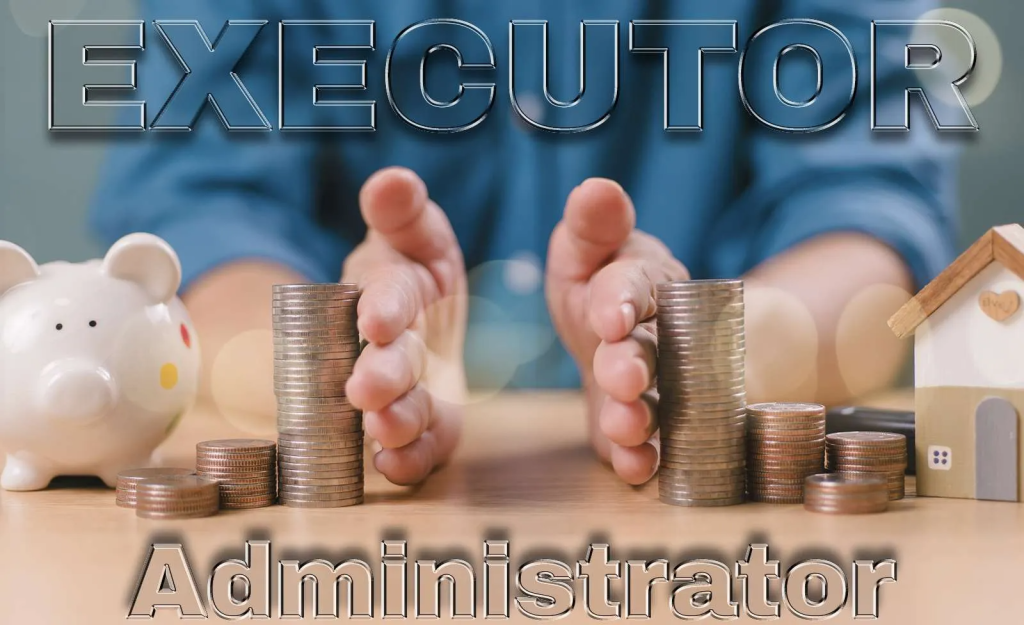
Understanding the role of executor shows a man's hands separating mock asets, like a piggy bank, a toy home, and coins.

On paper, becoming an executor or administrator of someone’s estate means you’ve been entrusted to take on an enormous responsibility. Some may consider it an honor… but before you accept this relatively unenviable task, it’s best to understand the key factors of what the job itself entails.

Key Factor #1 - Understanding the Difference Between Executor and Administrator

The executor and administrator basically have the same role to play—assess, safeguard, and distribute the decedent’s assets.

The main difference: an executor is named in the will and must adhere to the wishes set forth in the will while an administrator is appointed by the court in the absence of a will or when there is no executor named.

(From here on out, both the executor and administrator will be referred to as an executor.)

Key Factor #2 – Understanding the Workload

Whether the estate is big or small, the executor is responsible for safeguarding and distributing assets, notifying creditors and other interested parties, paying debts and taxes, filing court documents, keeping accurate records, and defending the estate against legal claims and beneficiary disputes. And that’s just the tip of the iceberg.

Handling these responsibilities is time-consuming as well. A simple estate with absolutely no conflicts may take up to a year to resolve while more complicated or larger estates take two or more years. If there’s any consolation, the executor can be compensated based on either an amount designated in the will or by the state in accordance with applicable laws.

Key Factor #3 – Understanding The Challenges

The executor will face a slew of challenges while administering the decedent’s wishes. This includes navigating complex legal issues, tackling disputes with creditors, refereeing conflicts among family members, locating missing assets (or heirs), and keeping heirs from stealing heirlooms prior to beginning probate.

Key Factor #4 – Understanding the Emotional Toll

With the heavy workload and slew of challenges inherit in probate, this process can easily become emotionally taxing. Prioritizing self-care and setting realistic expectations are a must so you can properly grieve.

Key Factor #5 – Understanding Limitations/The Fiduciary Duty

Executors are limited by their fiduciary duty to the estate in what they can and cannot do. First and foremost, executors are obligated to act in the best interest of the estate and defend its intent in all disputes. Once appointed, executors also become liable for any misappropriation of assets or blatant misconduct.

In a nutshell, the executor’s fiduciary responsibility keeps them from:

  • ignoring provisions of the will.
  • selling property for less than fair market value.
  • prioritizing their own interest over that of the estate.
  • paying themselves more than the allocated/lawful amount.
  • using estate funds for personal gain.

And, as with any law, ignorance does not excuse the executor from a breach of these duties.

Remember, even if named as executor in the will, you may request to be “passed over” before probate is granted. For more information and to help you through the complicated process of probate, check out our Complete Executor Duties Checklist.
Posted in:

Related Posts

8 important terms to know when becoming an executor of an estate with last will and testament photo superimposed on a photo of two people with paperwork

8 Important Terms to Know When Becoming Executor of an Estate

Becoming the executor of an estate is not an easy proposition, especially when you are unfamiliar with some of the legal terms associated with the tasks you will be required to perform. Some of these terms—assets, debts, heirs, inheritance, and jurisdiction—may be somewhat common knowledge to most. But there are some terms that if you do not fully understand, may lead to delays, contestation, or personal financial hardships. Let’s break down the top eight important terms to know when becoming executor of an estate. Executor The executor of a will is the person (or entity) that is appointed, either by the testator (the person who drafted the will) or by the court in the absence of a named executor, as manager of all legal duties in the collection of assets, resolving debt, and distribution of assets to beneficiaries in accordance with the testator’s wishes. The executor must be honest, diligent, and perform their duties in good faith. They may also be compensated for their services. Beneficiary Any individual, charity, or organization, legally designated by the testator to receive assets based on the wishes written in a will is also known as a beneficiary. Fiduciary Duty An executor is subject to fiduciary duty, which is the legal and ethical obligation an executor must adhere to when performing their duties, acting in the best interest of the estate and its beneficiaries. Though governing law may vary across jurisdictions, the core values of a fiduciary—loyalty, diligence, care, and transparency—remain universal. Letters Testamentary Letters Testamentary are legal documents that officially authorize the fiduciary role of the executor, giving them the legal authority to distribute the decedent’s assets. This includes the power to manage assets, pay debts and taxes, and access bank accounts. Abatement The legal process of eliminating (or reducing) a beneficiary’s inheritance when debts, expenses, and taxes exceed the value of the estate is known as abatement. Governed by state law, abatement ensures that all debts and costs are paid before any assets are distributed. Codicil A codicil allows a testator to amend their existing will without rewriting the entire document. In other words, this legal document is used as an addendum to update beneficiaries or executors, revise asset distributions, or void the original will. Ex parte Meaning “for one party,” ex parte is a legal request by one party to seek emergency relief without notifying any other party. Generally, courts will require proof of irreparable harm to justify a ruling on an ex parte petition. Intestate When there is no will or other legally binding document left behind by the decedent, the probate process becomes intestate. This alters the way assets are distributed through probate, as the probate court now becomes responsible for all decisions regarding the estate, subject to the state’s laws of intestacy. If you still have questions, it’s best to check out our Executive Duties Checklist, and then reach out to a qualified probate attorney.

3 responsibilities of an executor for probate shows last will and testament

3 Key Responsibilities of an Executor When Managing Probate

When you agree to be the executor of a will, there are plenty of responsibilities you must take on. (See our 6-Step Process for Probate for more). Here, we break down the three key responsibilities of an executor when managing the probate of an estate. First, Collect the Assets. Collecting assets seems straightforward, but there is a lot to consider. Questions to ask when beginning the process: Does the decedent have real estate? Where are those documents kept? What bank accounts does the decedent have? Is the information readily available? Did the decedent invest in anything? What do those contracts entail? How much personal property does the decedent own? How will this all be distributed? Are the assets a part of joint tenancy or in a trust? (These items are not subject to probate.) As assets are collected, keep a comprehensive budget, ledger, and/or catalogue of everything. This includes all banking information, real estate deeds, bills, phone numbers, emails, and other real property. Stocks, titles, vehicles, and other legal documents must also be transferred into the name of the executor. During this process, a court-appointed probate referee will valuate all non-cash items with fair-market value. Then, Pay Off Debts. Once collected and catalogued, the executor must enumerate and pay all debts before anything can be distributed. This may include credit cards, loans, utilities, and other liabilities. Creditors may also make claims against the estate, usually within four months of appointment unless they were not aware of the death. Make sure to identify assets that are protected from creditors and be prepared for possible lawsuits should you reject a claim. Most debts, including funeral costs, are usually paid for by the estate. It’s sometimes necessary to sell assets to cover these debts, though insurance policies may cover certain debts as well. If assets do need to be sold, beneficiaries must be notified at least fifteen days before the sale and a court may get involved if there is a dispute or objection. Some assets, such as student loans or Medicaid benefits, may be transferred or forgiven depending on the lender, while others, such as stocks, bonds, or real estate, must get court approval before selling. Finally, Handle All Necessary Taxes. They say the only two guarantees in life are death and taxes. Unfortunately, the decedent isn’t immune to taxes after death. There are several federal and state taxes, estate taxes, sales taxes, gift taxes, pre-death income taxes, and fiduciary taxes that must be paid out of the estate before assets may be distributed to beneficiaries. Remember, laws and taxes change constantly so it might be better to reach out to a tax accountant to make sure all paperwork is filed correctly and laws are being adhered to. Insolvency If there are not enough assets to cover all debts, the executor must declare the estate insolvent by petitioning the court. If they fail to do so, the executor may be held personally liable for any taxes or debts that may still be owed.

Filling out form DE-111 for probate petition

Key Aspects of Filling Out Form DE-111 Petition for Probate

As part of our primer for probate in California, the first step for initialing probate is to file your probate petition. Filling out Form DE-111 is the first step to take in California to appoint a personal representative or executor. Let’s breakdown the initial information requests at the top of the form. The Executor and the Estate The contact information (if not completed by an attorney) will be that of the representative or executor. If not represented by an attorney, write “pro se” or “self-represented” where it says, “Attorney for.” Then, add all pertinent information, including the county, for the superior court for which the form will eventually be filed. The county listed should be where the decedent lived at the time of death, or in the case of someone who lived outside of California, where they owned property. If you are not sure which court to file, check the superior court’s website for a list of probate courts. Just below this information will be where you list the decedent’s full legal name, along with any possible aliases or name variants. What type of probate you’re petitioning for There are up to four options to choose from when deciding what type of probate you will be petitioning for. If there’s a will in place, you will select either a “Probate of Will and for Letters Testamentary” (for wills in which you are named as an executor) or “Probate of Will and for Letters of Administration with Will Annexed” (if you are not named as executor of the will). If you know there is a will, but it has been lost, mark the appropriate box. If there is no will, leave these unchecked. Whether or not there is a will, there are other options to consider: Letters of Special Administrator: If you need the court to appoint a representative because of exigent circumstances (in other words, in 24-48 hours instead of the general 4 to 6 weeks it would normally take to appoint an executor), you will select this option. Possible reasons you may need to speed up the process would be because of an impending foreclosure or to protect specific assets. Authorization to Administer Under the Independent Administration of Estates Act: If for some reason, you, as the executor, need to take specific actions without court approval, you will select this option. Be careful, though, as the will may prohibit this action. With Limited Authority: If you are not planning to sell or deal with real property, mark this box. The rest of this form is relatively self-explanatory, requesting details regarding all aspects of the decedent and the will itself. Answer fully and honestly to all questions. If you need assistance, or aren’t sure about how to answer a question, contact King Law Firm Attorneys at Law, Inc. for a consultation. You may also learn more about the entire probate process by downloading our probate timeline checklist.