Blog / Featured

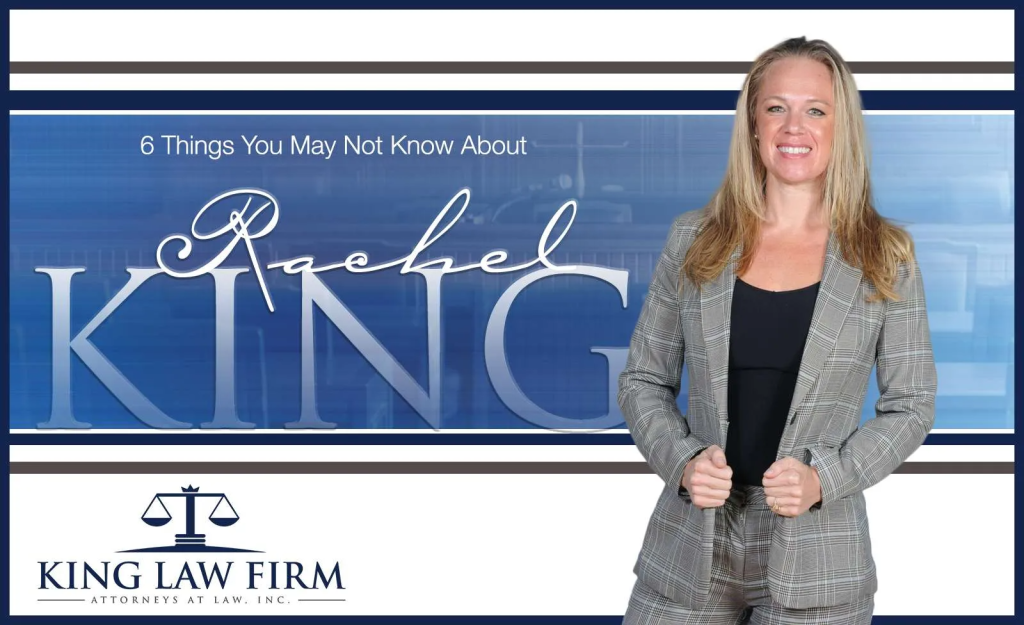
6 Things You May Not Know About Rachel King

the lawyer king law firm rachel king 5 facts jpg 1 - King Law Firm Inc. 6 Things You May Not Know About Rachel King

If you have been on this website or you’re a client or friend of Rachel King, you know that she’s accomplished quite a bit in her young life. After serving in the Army for seven years as a paralegal and Communication Specialist, she earned her Juris Doctor degree from Thomas Jefferson School of Law and formed King Law Firm Attorneys at Law, Inc. shortly thereafter.

But there are so many more layers to Rachel that you may not know about.

Grew Up in a Family of Lawyers

You could say Rachel was born into the law. Her father, Patrick King, is a practicing lawyer in Nevada and her cousin, Scott Russo, is a litigator in Orange County, California. As a child, she would “help” her dad with his cases, learning how to make strategic decisions within the confines of the law.

Joined the Military Soon After Graduating High School

Rachel spent a few months in college, but realized early on she wasn’t mentally ready for the work needed to become a lawyer. Without a job, money, or a place to live, she decided to join the military. Her decision came shortly after 9/11, so her family had mixed feelings, but the decision taught her the discipline she needed to embrace the suck in all aspects of her life.

She Was Sued When She Was 21

Though the lawyer she had after being sued made her feel small, ineffective, and dumb, the experience gave her insight into how she didn’t want to practice law. She learned how to be fierce, but kind, respected, but feared, and led her to be humble, approachable, relatable, and trustworthy. It’s also why she is always upfront with her clients about concerns she may have and the emotional toll their case may have on them and their family.

Has a Quarterly Mandatory Fun Day at the Firm

A team is only as good as its weakest member. To keep her team in peak mental condition, Rachel plans a mandatory event each month for her staff. Whether it’s going to a spa, an escape room, a paint and sip, or a simple lunch, getting them out of the office for a day of team building helps build comradery, raises morale, and strengthens the foundation of the firm.

Is an Avid Runner and Hiker

For Rachel King, exercise is her opening statement, helping her start the day on the right path. Routinely running and hiking maintains her mental and physical health, clears her mind and releases the extreme amount of stress that comes with the job.

Is a Literature and Writing Major and a Very Avid Reader

Rachel reads every day before bed. Though her favorite genre is historical fiction, her favorite nonfiction books include Born to Run: A Hidden Tribe, Superathletes, and the Greatest Race the World Has Never Seen by Christopher McDougall and the recent New York Times Bestseller Breath: The New Science of a Lost Art by James Nestor.


Bonus: Rachel may be the only lawyer who doesn’t drink coffee!!

“What I really did find, whether it was working out or anything, is letting myself be okay with only doing that one step, knowing subconsciously that once I do that step, it’ll keep going.” — Rachel King
Posted in:

Related Posts

Rachel King Book Launching - King Law Firm Inc. Getting Divorced… Now What? A Q&A with Attorney Rachel King

Getting Divorced… Now What? A Q&A with Attorney Rachel King

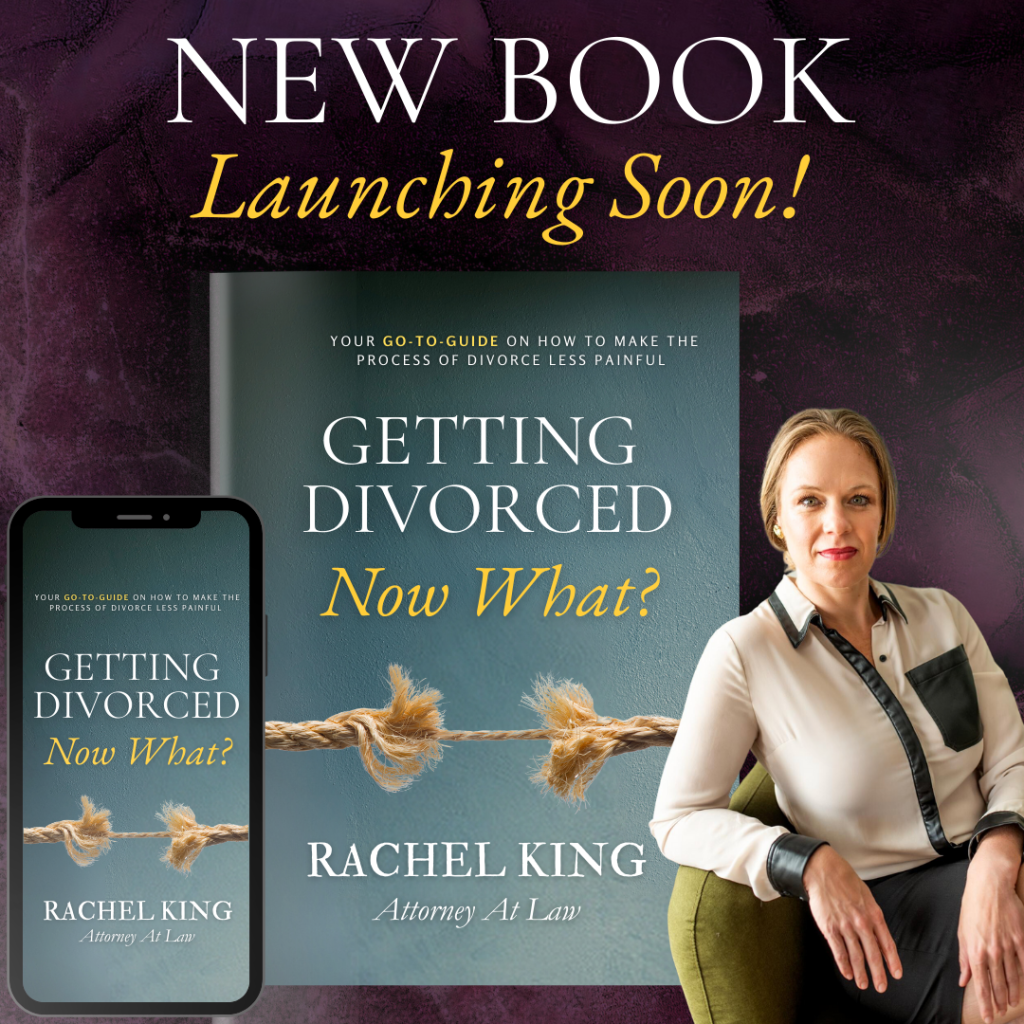
Rachel King, lead litigation attorney at King Law Firm Attorneys at Law, Inc., has a new book being released soon. We talked to Rachel about the book, Getting Divorced... Now What? and the challenges one might face when representing themselves during divorce. 1. What is Getting Divorced… Now What? It is everything I have learned over a decade of practicing litigation. It is my attempt to share the inside scoop on divorce in a way that is helpful for individuals facing divorce, which includes case studies, general legal information, tips and tricks—all written without legalese. 2. What Inspired you to write the book? I found that the expectations clients have in a divorce vary hugely but are also unrealistic when compared to the law and are often driven by emotion. This can cause a person to get completely off track and make their case worse. I wanted to share a different perspective, one that many people never get (details attorneys feel are unpopular) attorneys feel the or have to pay a lot of money for (hiring their own attorney). 3. How did you choose the real-life stories included in the book? I’ve watched thousands of people in court—I’ve seen it all. So, I looked at a lot of common scenarios and tried to pick situations that are most likely to be encountered or that illustrate a specific issue in the best way. My goal is to share stories that show ‘you are not alone’ while bringing credibility to the information I am sharing. Of course, the real-life stories included in the book are only based on people and families; the details and the players in each one have been changed. 4. Do the stories offer a comprehensive look at the challenges faced during a divorce? I definitely had to balance comprehensive with taking people down the rabbit hole. (Believe me, I could have written an entire series—and maybe I will!) My goal is to be a helpful resource, not a law school course. Therefore, I focused on what I considered the most common issues, and concepts that are misunderstood, or unpopular realities that no one is talking about in divorce. 5. In your opinion, what is the most influential real-life story in the book? I love the stories that share empowerment. Divorce is hard. Showing that people can have a successful outcome through divorce is important; or maybe even better, can have a successful post-divorce life even if they lose. I really want to show people that the law is different than the dream. Understanding that early can make the process more tolerable. 6. What are some common misconceptions when representing yourself in a divorce? Hands down—that you get special treatment because you don’t’ have an attorney. Not the case. The court may be more patient, but you will be held to the same standards as the attorney sitting across the table from you. This is most difficult when it comes to presenting a case in trial and getting in evidence. 7. What are the top three mistakes people make when representing themselves in a divorce? Making decisions in their own case based on what happened to their friend. Not taking the time to understand the law. Thinking you get special treatment and that the court will let it slide just because you are representing yourself. 8. Does Getting Divorced… Now What? Help readers understand the financial implications of divorce, both during and after? There is definitely discussion about dividing assets, debts, and child and spousal support. Because, let’s face it, divorce causes financial upheaval. But fear not; this is not an economics class, and you don’t have to do math. 9. How can Getting Divorced… Now What? mentally prepare someone for divorce (and to represent themselves through the divorce)? It gives a global understanding of divorce, which can be used as a starting point when preparing for divorce, but it can also be used throughout the process to help focus and review your case so that you remember what you are fighting for. The reality is that goals are going to change throughout the process—and even after—so revisiting this can be very helpful. 10. What was your strategy for putting together the workbook that goes along with Getting Divorced… Now What? The amount of information needed in a divorce can be daunting. The goal of the workbook is to create a free space that can help organize information so that you can look at what the real issues are, what your goals are, and what the argument is. I wanted to provide a space that could be easily accessible and hopefully provide confidence in an otherwise overwhelming and paralyzing process. 11. What is the most surprising thing you learned while putting the book (and workbook) together? It is a lot of work! The biggest challenge was trying to include important and helpful information without it turning it into a dissertation or encyclopedia. It was very hard to say “OK Rachel. It is OK to stop now.” I could have gone on forever. 12. What is you’re the most important piece of advice you can give someone representing themselves in a divorce? Prepare properly. Properly being the operative word. Sign up to King Law Firm’s newsletter to get notified when Getting Divorced... Now What? goes on sale. For more on divorce, check out these posts: 5 Factors to Consider When Representing Yourself in a Divorce Summary Dissolution – Simplified Divorce in California California Divorce in 6 Simple Steps — A Primer

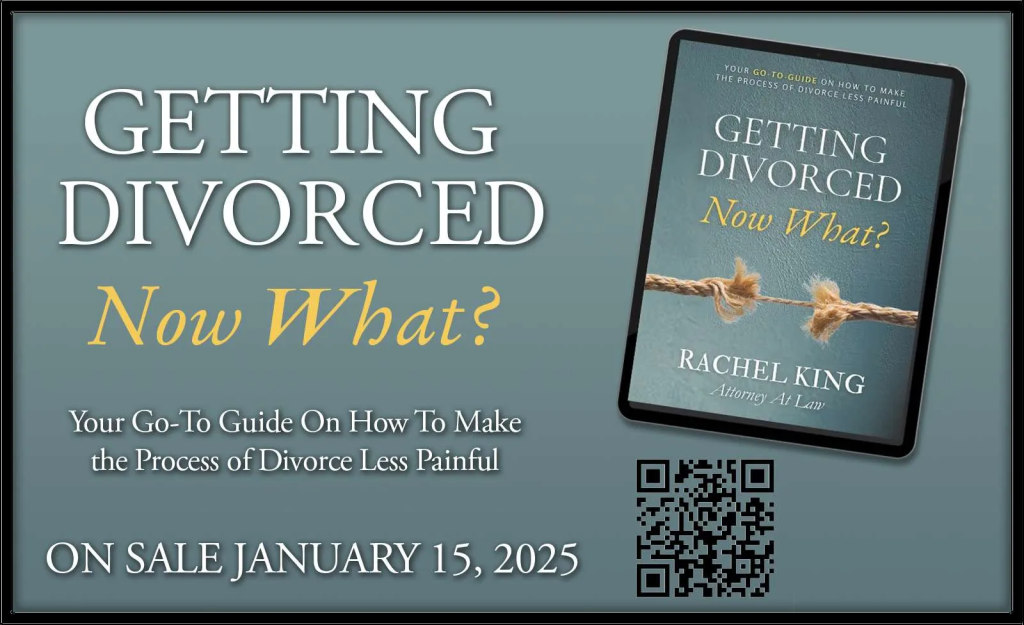
Getting Divorced... Now What? advertisement with book cover and QR code announcing sale on January 15, 2025

Getting Divorced… Now What? – Buy It January 15th, 2025

“When faced with the question of whether you should stay in a marriage, difficult emotions are bound to arise…. Despite the emotions involved, a life-changing decision needs to be made when considering the financial, emotional, and legal implications specific to your situation. The first question you should ask is: ‘Should I file for divorce or repair my marriage?’.” Thus begins Getting Divorced... Now What?, a new go-to guide on making the process of divorce less painful. Life And Expectations Change No one expects they will be heading for divorce when they say yes to a proposal from someone they deeply love. But life, growth, and experience inevitably change people, and if one’s spouse is unable to accept those changes, divorce also becomes inevitable. Whether the divorce is amicable or catches one party off-guard will determine how complicated and emotionally devastating this life-changing event becomes. Getting Divorce… Now What Written by family law and litigation attorney Rachel King, Getting Divorced... Now What? explores the many complexities of divorce. Her main goal in writing the book was to compile what she’s learned over ten years of representing and witnessing thousands of family court cases into a compassionate, relatable roadmap for those who may not be able afford an attorney. It provides the tools necessary for anyone contemplating divorce—or in the midst of one—to confidently navigate the rigors (emotional and legal) of divorce and simplify the complicated chapter of their life. Real-Life Stories One key element of Getting Divorced… Now What? are real-life anecdotes and stories that offer a sense of relief, letting them know that they are not going through their divorce alone. Here’s a quick excerpt of one story (names and facts have been altered to protect the individuals involved): “Meet Sarah and John: They live in the heart of a bustling city, amidst the chaotic rhythm of life. They married at 23 years old, right after college, deeply in love, and quickly started their family. Now, thirteen years later, life is taking its toll on their marriage…. She finds herself overwhelmed, and her marriage is feeling the brunt of it. She is torn between wanting to save the marriage, or realizing that maybe it's too late, and it’s time to move on. A lot has happened over fifteen years. She is exhausted and not sure if she is emotionally willing to invest another day in her marriage.…. Their journey began like a fairy tale, with stolen glances, and promises of forever. Yet, as time and life unfurled its complexities, cracks began to form in the once-solid foundation of their marriage. Sarah, with her heart heavy with burden, finds solace in the silent confinements of her therapist's office. Should she stay or should she go?” You Are Not Alone With many anecdotes, stories, and practical and authoritative information from Rachel King’s ten years of experience, by the time you’re done reading Getting Divorced… Now What?, you will no doubt believe “You are not alone, and you will survive!” Take your first step towards healing and empowerment by checking out a free chapter of Getting Divorced… Now What? And look for the book when it’s released on January 15, 2025. Get answers to all of your burning questions about Getting Divorced… Now What? Disclaimer: Getting Divorced… Now What? is not a replacement or substitute for legal advice. You should speak with an attorney in your jurisdiction to get legal advice on your case. The book is not legal advice and is not intended to be legal advice. The book is for informational and entertainment purposes only. Buying, reading, or otherwise using this book does not establish an attorney-client relationship, nor does it constitute legal advice.

Can a Trust Help Avoid Probate in California?

Yes, a properly created and funded trust can help certain assets avoid probate in California. For many families in Wildomar and throughout Riverside County, a revocable living trust can be an important estate planning tool because assets held in the trust can generally pass according to the trust's instructions without going through the traditional probate process. However, simply creating a trust is not enough. Assets generally must be properly transferred into the trust for the trust to accomplish its intended purpose. If you have questions about a trust, probate, trust administration, or a dispute involving trust assets, King Law Firm Attorneys at Law is located at 34859 Frederick Street, Suite 108, Wildomar, CA 92595. Call 951-834-7715 or contact King Law Firm Attorneys at Law to discuss your situation. more How Can a Trust Help Avoid Probate? Probate is the court-supervised process that may be used to administer assets remaining in a deceased person's estate. Whether probate is required depends on factors including how assets were owned, their value, beneficiary designations, and the estate planning documents in place. A properly funded living trust works differently. When assets are transferred into a trust, legal title to those assets is held by the trustee according to the terms of the trust. During your lifetime, you may serve as trustee of a revocable living trust and continue managing the trust property. You can also name a successor trustee who can take responsibility for administering the trust after your death or if circumstances described in the trust require a successor to act. Because property properly held in the trust does not need to be transferred through a will at death, those assets can generally be administered outside of probate. Creating a Trust Is Only Part of the Process One of the most important aspects of using a trust for probate planning is funding the trust. Creating and signing a trust document does not automatically place all of your property into it. Depending on the type of asset, additional steps may be necessary to transfer ownership or otherwise coordinate the asset with the estate plan. For example, real estate intended to be held in a trust generally requires appropriate documentation to transfer title to the trustee of the trust. If an asset remains individually owned at death without another method of transfer, the existence of a living trust alone does not necessarily prevent that asset from becoming part of a probate estate. For questions about how a trust may affect probate in California, call King Law Firm Attorneys at Law at 951-834-7715 or request a consultation online. Types of Trusts Used in California Estate Planning There are many types of trusts, and each serves a different purpose. Two broad categories people commonly encounter are revocable and irrevocable trusts. Revocable Living Trust A revocable living trust is commonly used as part of an estate plan. As the name suggests, a revocable trust can generally be amended or revoked by the person who created it while that person is living and has the legal capacity to make those decisions. The person creating the trust may also serve as the initial trustee, allowing that individual to continue managing property placed in the trust. The trust can provide instructions concerning: Who will serve as successor trustee How trust assets should be administered Who should receive property after death When and how beneficiaries receive their distributions How certain property should be handled if the creator becomes incapacitated When assets are properly titled in the trust, the successor trustee can generally administer those assets according to the trust rather than transferring them through probate. Irrevocable Trust An irrevocable trust generally provides substantially less flexibility than a revocable living trust. Depending on the type of irrevocable trust and its terms, the person establishing it may give up significant rights or control over the transferred property. Irrevocable trusts may be used for specific estate planning, asset-management, tax, or beneficiary-related purposes. They should not be viewed simply as a "better" version of a revocable trust. Whether an irrevocable trust is appropriate depends heavily on the circumstances and objectives involved. Does Everything in a Trust Automatically Avoid Probate? No. The important question is not simply whether someone has a trust. It is whether the relevant property was properly transferred to or otherwise coordinated with the trust. This is why periodically reviewing an estate plan can be important. Someone might establish a living trust and later purchase a home, open financial accounts, acquire investments, or receive other property without considering how those assets fit into the existing plan. When property is left outside the trust, additional procedures may be necessary after death. What About Assets With Named Beneficiaries? A trust is not the only way property can potentially transfer outside probate. Certain assets may pass through beneficiary designations, survivorship rights, or other legally recognized transfer mechanisms. The correct approach depends on the particular asset and how ownership and beneficiary designations are structured. An effective estate plan therefore involves more than simply preparing a trust document. The trust, property ownership, beneficiary designations, and other estate planning documents should work together. Why Should a Trust Be Reviewed? Estate plans should not necessarily remain untouched for decades. A review may be appropriate following significant personal or financial changes, such as: Marriage or divorce Birth or adoption of a child Death of a beneficiary or trustee Purchase or sale of significant real estate Major changes in financial circumstances Acquisition of substantial new assets Changes in family relationships or planning priorities Changes in California law may also affect estate planning considerations over time. A review provides an opportunity to determine whether the trust still reflects your wishes and whether assets have been properly coordinated with the plan. What Happens After the Trust Creator Dies? Avoiding probate does not mean that nothing has to happen after death. A successor trustee generally has responsibilities associated with administering the trust. Depending on the circumstances, these duties can include identifying and safeguarding trust property, reviewing the trust's instructions, communicating with beneficiaries, addressing debts and expenses, maintaining appropriate records, and ultimately distributing assets as directed by the trust. Trust administration can also lead to disagreements. Beneficiaries may question a trustee's decisions, distributions, accounting, handling of property, or interpretation of the trust. Trustees may also encounter disagreements among beneficiaries or uncertainty concerning their responsibilities. King Law Firm Attorneys at Law handles trust litigation matters involving trustees, beneficiaries, trust administration, and disputes over trust assets. If you are involved in a trust dispute or have concerns about how a trust is being administered, call 951-834-7715 or contact King Law Firm Attorneys at Law. Can a Trust Guarantee That Probate Will Never Be Necessary? No estate planning document should be treated as an absolute guarantee that probate will never be required. Whether probate or another court procedure becomes necessary depends on the assets involved, how they were titled, their value, applicable California law, and the circumstances existing at the time of death. A properly established and funded trust can nevertheless be an important tool for reducing the amount of property that may otherwise have to pass through probate. Talk With King Law Firm Attorneys at Law in Wildomar, CA Trust and probate issues can become complicated when property ownership, beneficiary rights, trustee responsibilities, or family disagreements are involved. King Law Firm Attorneys at Law is located in Wildomar, California, at: King Law Firm Attorneys at Law 34859 Frederick Street, Suite C Wildomar, CA 92595 If you have questions involving a trust, probate matter, trust administration, beneficiary rights, or trust litigation, call 951-834-7715. You can also contact King Law Firm Attorneys at Law online to request a consultation. This article is intended for general informational purposes and does not constitute legal advice regarding a particular estate, trust, or probate matter.