
Blog / Conservatorship

Blog

All Conservatorship Family Law California Law Estate Planning - Wills, Trusts, and Probate Divorce Business Legal Documents Pop Culture Custody Probate Code Child Custody COVID-19 King Law Firm News Lawyer Guardianship Executor Legal Codes Litigation Arizona Law Holidays Marriage Beneficiary Featured Immigration Wills Fiduciary Kentucky Law LGBT Nursing Home Neglect Realty Texas Law Trusts Undue Influence Adoption Annulment Awards Books Domestic Violence Expungement Fifth Amendment First Amendment Inflation Landlords Mergers & Acquisitions Mitigation Podcast Prenuptial Agreements Reverse Isolation Self-Incrimination Social Media Summary Dissolution Videos
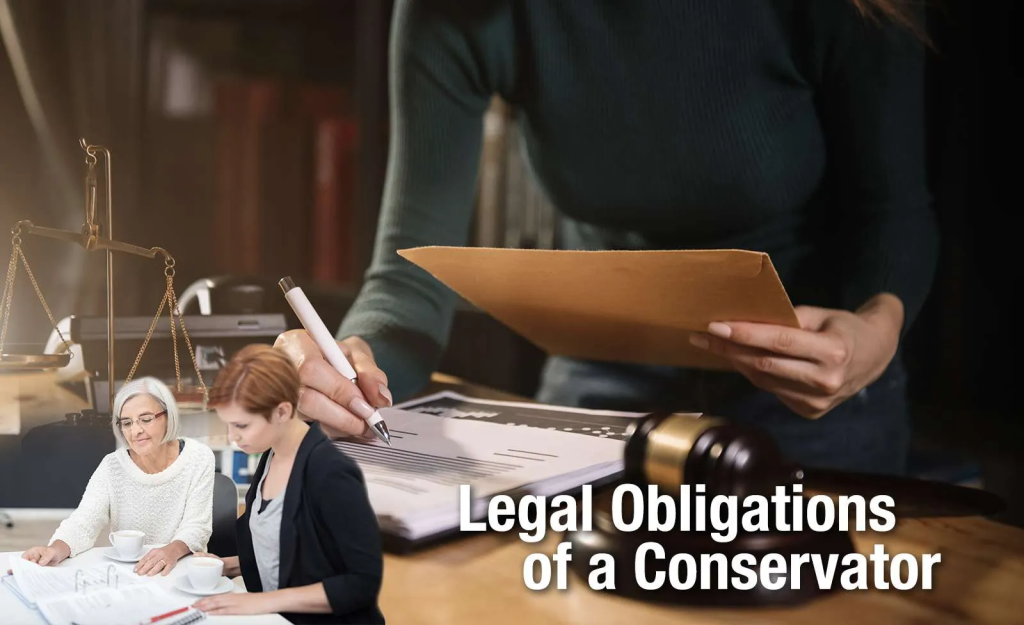
legal obligations of a conservator represented by a woman signing documents in a law office and an inset of a woman helping an aging adult with paperwork

4 Ongoing Obligations of a Conservator of an Aging Adult

Screenshot Even though you can legally take on the responsibilities of a loved one’s financial and medical decisions when they become unable to do so themselves, being a conservator isn’t to be taken lightly. It’s not just about signing a document; that’s just the beginning. There are many ongoing obligations of a conservator of an aging adult that must be considered before agreeing. Obligation #1: Managing The Conservatee’s Personal Care (Acting in Their Best Interest) You don’t just step into the role of conservator; you must do so with the respect to the conservatee’s dignity. Following California Probate Codes governing fiduciary duties, a conservator must make sure the rights of the conservatee are protected. This includes taking into consideration their wants and needs before making any decisions, respecting their ability to receive visitors, and acknowledging any request for terminating the conservatorship. You also must be aware that once a judge signs off on the letters of conservatorship (which detail what you are allowed to do as conservator), you can be held personally liable if found negligent or going against the conservatee’s best interest. Obligation #2: Keep Detailed Records of All Actions and File Annually with the Court As a conservator, you must maintain meticulous accounting regarding changes to income and expenses, and the health and living situation of the conservatee. After filing an initial appraisal of all assets, the court will appoint someone to conduct periodic reviews, usually every two years after the first twelve-month initial review. Conservator’s must also attend all court hearings and court-offered trainings, keep their contact information up-to-date, and cooperate with investigators. Failing to meet these requirements may be cause for intervention or removal as conservator. Obligation #3: If Conservator of the Estate, Manage Finances As a conservator of the estate, there are many requirements that must be met beyond simply managing finances. First, you must file a surety bond with the court (unless ordered otherwise). Second, you must track all expenses, maintain all necessary insurance (such as life insurance), and properly file all federal and state taxes. Finally, it’s always a good idea to open a separate conservatorship checking account. This way, you have a better gauge on the conservatee’s finances, can keep from comingling your money with theirs, and know when it’s necessary to borrow money on their behalf. Obligation #4: If Conservator of the Person, Make Healthcare Decisions. As a conservator of the person, you have the authority to approve medical treatment and manage caregivers. However, according to the Lanterman-Petris-Short Act, you must attend separate court hearings to place a conservatee in a psychiatric hospital, force feed them medications, or sterilize them. You must also provide copies of your letters of conservatorship to any hospital or care facility that request proof of conservatorship. These legally complex obligations can become emotionally draining, which is why it’s best to have an experienced attorney on your side. Check out our guide to Navigating Conservatorship for Aging Adults and then give King Law Firm Attorneys at Law, Inc. a call.

alternatives to conservatorships include a durable power of attorney, living trust, and advanced healthcare directives

4 Alternatives to Conservatorship for Aging Adults

When someone you love begins to show signs of dementia or other cognitive declines, you may be faced with several emotional and practical challenges. For instance, your loved one’s behavior may change, or they may begin to lose their memory or the ability to perform daily tasks, leading to financial losses or further decline in health. When this occurs, a lot of people petition for conservatorship over their aging adult. This allows them full control over major life decisions that may include financial and healthcare directives. However, for some adults, this may lead to feelings of resentment and anger as they no longer have control over their life. Recent legal challenges in California have helped mitigate the stranglehold some may have on a conservatorship, like the conservatiee’s right to contest a conservatorship or petition the court to end a conservatorship, but it can still be very difficult to end a conservatorship once it’s in place. Luckily, there are alternatives to conservatorship you can pursue to not only provide a healthy support system for someone who may become incapacitated, but to help guide and assist them when they are unable to do so on their own, all while avoiding a long legal battle or straining a loving relationship. 1. A Durable Power of Attorney A durable power of attorney is a great way to assist with finances and healthcare decisions without taking all rights away from their loved one. It ensures that how a person’s finances are handled, or what medical treatments they want or don’t want, are always honored. 2. An Advanced Healthcare Directive Similar to a durable power of attorney, the advanced healthcare directive provides information for what procedures and treatments you want and don’t want in specific situations without court intervention. Fill out this form to setup your Advanced Healthcare Directive. 3. A Living Trust Most may believe that a living trust is simply for listing what will happen to assets upon a person’s death without probate, however, a living trust may also allow for provisions should a person become incapacitated. 4. Supported Decision-Making Agreements Supported decision-making agreements allows the incapacitated party to retain authority over their financial and healthcare decisions with the support and necessary assistance of a trusted individual. Remember, whereas a conservatorship can only be sought after someone becomes incapacitated, these alternatives to conservatorship must be drafted and signed while each party is of sound mind and body, allowing the party who becomes incapacitated the opportunity to choose someone they absolutely trust to follow their assigned directives. It also gives the chosen proxy or agent the opportunity to provide valuable feedback on the other person’s financial and healthcare wishes prior to the individual becoming incapacitated. Reach out to an attorney to learn more about which alternatives to conservatorship may be in the best interest of you and your loved one, then download our Guide to Navigating Conservatorships for Aging Adults should you like more information, practical tools, and compassionate insight into the conservatorship process.

KLF king law firm conservatorship for disabled children 1 - King Law Firm Inc. Conservatorships for Disabled Children

Conservatorships for Disabled Children

In most states, the terms “Guardianship” and “Conservatorship” are one and the same; interchangeable. California, however, has a very clear distinction between the two. A guardian is someone who takes care of a child under the age of 18 when the child’s parents are deceased or incapable of properly caring for the child. A conservator, on the other hand, is someone who must take care of certain aspects of a child’s life once they turn 18 (or become a legal adult) because they are developmentally disabled. Developmental Disability Being developmentally disabled means the individual has been diagnosed with an ongoing disability (i.e. autism, cerebral palsy, or epilepsy) prior to turning 18. Some disabilities excluded as reasons for setting up a conservatorship include brain trauma, depression, and anxiety disorders. Types of Conservatorships There are two types of conservatorships: general and limited. A general conservatorship strips the disabled person of all individual autonomy. Basically, it eliminates their civil and legal rights, removing their ability to make decisions on everything from finances, healthcare, and education. In a limited conservatorship, the developmentally disabled individual retains most of their civil and legal rights. Instead, the court appointed conservator may only have control over specific aspects of the person’s life, which may include the individual’s living arrangements, ability to access confidential records and enter into contracts, social and sexual relationships (including marriage), healthcare, and education. The Dangers of Conservatorship The goal of a conservatorship is always to appoint a trustworthy, responsible person as conservator. However, because anyone over the age of 18 can become a conservator, this isn’t always the case. Half of all conservators in the U.S. are strangers, usually someone from the California Department of Developmental Services or a paid professional. Also, if a conservator dies, the judge will select a new conservator regardless of who the deceased conservator may have wanted to succeed them. Because of this, conservators may easily take advantage of the conservatee, whether financially, emotionally, or physically. Though there are safeguards when it comes to finances, many people still find ways to exploit the conservatee for financial gain. Conservatorships also do not protect against sexual or physical abuse, nor do they offer protection if a conservatee is arrested. Minor Conservatorships Though conservatorships in California are generally meant for adults, there are a few exceptions. When both biological parents die, a guardian will be appointed to care for the child’s health, education, and general well-being, but a conservator may be appointed to care for the minor’s financial estate, especially if they receive certain assets and property as part of a will or trust. A conservator may also be setup for a minor if the child needs specialized care the parents are unable to provide. With all of this in mind, conservatorship should always be a last resort. Setting up a power of attorney or hiring an advocate for decision-making may be better options for your specific circumstances. Call King Law Firm Attorneys at Law, Inc. to discuss your options.

lawyer discussing conservatorship case with clients

5 Reasons to Hire an Attorney in a Conservatorship

Conservatorships are the best way to protect a loved one when they become physically or mentally incapacitated. In other words, a conservatorship allows you to take control over another person’s finances, health, and well-being when they are incapable of doing it themselves, or when doing it themselves would cause them harm. However, conservatorships can also be problematic or vehemently contested. Some may fight to keep you from becoming a conservator, and at other times, conservators can abuse the fiduciary duties of the conservatorship for personal gain. Whatever the case, finding a knowledgeable attorney who can help navigate these issues may become necessary. But when do you know when to hire an attorney? When the Process Becomes Too Overwhelming Becoming a conservator, or fighting to end one, can be a stressful endeavor. Applying for conservatorship is a multi-step process that involves mountains of paperwork, court hearings, and investigations. One misstep and it could mean denial or having to start over. Finding an attorney who specializes in the conservatorships can help guide you through the entire process. When Filing a Petition for Conservatorship and Delivering the Citation Petitions (a motion to apply for conservatorship) and citations (notifications to all interested parties) are both critical components in applying for conservatorship. However, both the petition and citation must be filed by a neutral third party. Instead of asking your friend to file and deliver these documents, hire an attorney who understands the nuances of the petition and can create and deliver a legally enforceable citation. When the Conservatee is Assigned One by the Judge Before a conservatorship is granted, a judge may choose to speak to the conservatee. At any point the judge believes the conservatee needs a lawyer, they will appoint one for them. Hiring an attorney before the conservatee is asked to appear will provide better protection for their future interests. When a Conservator Abuses Their Fiduciary Duties If you are a conservatee and believe your conservator is exploiting their authority for personal gain, or acting in a way that is not in your best interest, you may want to contest the conservatorship. Whether that means ending the conservatorship or simply appointing a new conservator, an attorney can help you file the necessary paperwork, send out proper notices to interested parties, and aid in court hearings. When a Conservator Oversteps Their Authority Having a limited conservatorship means the conservator may only have authority over one aspect of a person’s life. If the conservator begins to control things that are not a part of the limited conservatorship, an attorney can help the conservatee regain the authority over aspects they can manage on their own. You may also seek advice if a conservator refuses to relinquish authority after a temporary conservatorship expires. We all want to believe we can handle these personal situations alone. But knowing when to hire an experienced attorney to navigate the rough, emotional waters of conservatorship may be the best thing you can do for you or your loved one.

kids holding signs that say free Britney sitting on a small wall boycotting California court proceedings

SPECIAL BLOG! What do Brittany Spears, Steve Jobs, and Charles Manson have in common?

Celebrity status is likely to be the first choice pick. Spears, Jobs, and Manson are household names recognized across the United States, and even internationally. Somewhere on the list of commonalities, these infamous beings also share the experience of being involved in California court proceedings; more specifically cases involving the control of their person. #FreeBrittany Brittany was the subject of a California conservatorship case for over 13 years where her father, Jamie Spears, was granted the legal authority to make decisions over Brittany’s every move including who she dated and what her text messages said. Jamie’s decisions were controversial at best and more likely an abuse of power, resulting in the #FreeBrittany movement. In 2021 Spears was finally granted her freedom. #Apple Steve is best known for #Apple. But far before changing the trajectory of technology, Jobs ended up going through California court dependency proceedings when his mother gave him up at birth. Fortunately for Steve, his foster experience sent him to live with his soon-to-be adoptive parents. #MansonFamilyCult Charles, may not be liked nearly as much as Spears and Jobs, but his California court experience received more notoriety than both of them combined. Manson is best known as the mastermind behind the #MansonFamilyCult; a cult responsible for numerous murders and deaths. Interestingly, after his death, family members and potential heirs went to battle over his remains and his stuff. Fighting For Your Rights Most of us are not going to become founders of the next #imac, or #superstar, and hopefully, we won’t have another #deathcult developing. Celebrity or not, one thing we all have in common: we know someone suffering from dementia, a child without parents, or a family member battling for their inheritance. We know someone fighting to protect their rights in the California probate system. Brittany Spears, Steve Jobs, and Charles Manson didn’t plan on being the subject of California court proceedings. I venture to say, that none of them thought control of their person would be in the hands of a judge. Your Best Advocate I may not have much in common with Manson, ideas as innovative as Jobs, or the ability to entertain like Spears, but I know that if I end up being the subject of a California probate court proceeding, I want an advocate on my side that will fight for me, and ensure that my voice is heard. © Rachel King 2022

guardianships conservatorships conservator guardian ward family loved one

Guardianships vs Conservatorships in California and Arizona

When someone is mentally or physically incapacitated, they may not be able to perform tasks necessary to live. When this happens, family members or friends may have the right to become a guardian or a conservator and take legal responsibility for performing personal and financial tasks for them. Which one, guardianship or conservatorship, is right for your situation? That mostly depends on which state you live in. Because King Law Firm Attorneys at Law, Inc. practices in both California and Arizona, we’ve compiled some key similarities and differences these states have when it comes to guardianship or conservatorship. Guardianship Becoming a guardian over another person Is taking legal responsibility over day-to-day medical, educational, and personal decisions for that person because they have become physically or mentally incapacitated. However, in California, guardianships refer to only those persons who represent the affairs of a child. When a child’s parents pass away or are no longer able to safely care for the child, a family member can assume permanent or temporary guardianship. If petitioning for guardianship becomes combative, there are a couple of other options to guarantee a child’s safety: 1) a clear and concise private agreement can be entered into between the guardian and the parents; or 2) the guardian can present a Caregiver’s Authorization Affidavit, which gives the guardian legal right to make educational and medical decisions. Both alternate options can be revoked by the parents at any time. In Arizona, guardianships are appointed for anyone, regardless of age. Guardianships can be general (covering all medical, educational, and personal decisions) or limited to a specific purpose, such as making emergency medical decisions or finding specific living arrangements. Guardian’s may also suspend a ward’s driver’s license or ability to vote. Conservatorship In general, conservators provide care and protection for the ward, such as providing meals, purchasing clothes, maintaining the home and hygiene, arranging for medical care, and managing the estate. Conservatorships are not normally setup if the person in question drafted a durable power of attorney prior to becoming incapacitated. In California, a conservatorship acts the same as a guardianship but for adults. This includes both personal and financial responsibilities. These conservatorships can be limited (usually meant for the developmentally disabled) or general (which covers all other types of mental or physical issues, such as dementia, physical injury, or those susceptible to undue influence). In Arizona, though, a conservatorship strictly focuses on financial responsibilities, such as a person’s everyday bills or the estate, for a child or adult. There are three types of conservatorships in Arizona: General (covers all financial responsibilities), limited (covers only a select type of financial responsibility), or single transactional (covers one specific task, such as investing funds or paying taxes). If you aren’t sure if you should take the next step, King Law Firm Attorneys at Law, Inc. can help you decide between guardianship or conservatorship for you and your loved one.

KLF Blog britney spears conservatorship free britney 1 scaled - King Law Firm Inc. Britney Spears Conservatorship Abuse

Britney Spears Conservatorship Abuse

On the surface, Britney Spears is a successful entertainer worth nearly sixty million dollars. A flourishing music career and a seemingly upbeat public persona would indicate she’s living a healthy life. However, as evidenced by Britney’s outcry to end her father’s conservatorship, her life behind-the-scenes is a lot darker than we’ve been led to believe. What is a Conservatorship? Conservatorships allow someone to gain legal guardianship over an adult. Its original intent was to protect the best interests of those who have been in a serious accident or have been found to be mentally incapable of making rational financial or medical decisions. Conservatorships can be limited to the control of someone’s finances or healthcare, or they can be given full control over the entirety of another’s decisions. A probate or family court will determine if a conservatorship will be short-term, temporary or permanent. What Led to Britney Spears’s Conservatorship? The road that led to Britney’s conservatorship began in 2002 with her very public breakup with Justin Timberlake. She spent her days mired in work and her nights partying with the likes of Paris Hilton and Lindsay Lohan. In 2004, Britney met and married Kevin Federline. The couple divorced shortly after the birth of her second son two years later. Although both parents partied after the divorce, Britney got the brunt of tabloid fodder. This constant deluge of attacks on her character eventually led to the infamous shaving incident. Her downward spiral continued after losing shared custody of her children. During one of her visitations, Britney refused to let her kids go and was placed under an involuntarily psychiatric hold. A second incident a few weeks later led to the inevitable request for a conservatorship. How was Britney’s Conservatorship abused? Abuse happens due to the broad aspects of conservatorships. In Britney’s case, a lot of factors opened the door for her father, Jaime, to take advantage of his daughter’s hardships. Legal proceedings for Britney’s conservatorship took very little time, with no questions or testimony. The California law requiring a five days’ notice before the enactment of a conservatorship was waived. Monitoring of the conservatorship was lax, allowing Jamie to revoke Britney’s marriage and reproductive rights, monitor her friends and conversations, and limit her spending. She was also constantly threatened if she refused to perform or agree to jobs her father assigned her. #FreeBritney and the Future An online movement that would become known as #FreeBritney has led the United States Congress to draft bipartisan legislation to reform the state-run conservator system. A judge in the case has finally agreed to allow Britney to hire her own lawyer and file a petition demonstrating that the conservatorship is no longer required. The rise in Britney’s net worth after the conservatorship was put in place would indicate that everything was done in her best interests. Only those close to the matter may ever know for sure. But, regardless of whose story is true, Britney’s case has brough a spotlight to the possibility of conservatorship abuse.

Contact Us

Fill out this form below and we'll contact you shortly
*Required Fields