Blog / Undue Influence

Blog

All Undue Influence Family Law California Law Estate Planning - Wills, Trusts, and Probate Divorce Business Legal Documents Pop Culture Custody Probate Code Child Custody COVID-19 Conservatorship King Law Firm News Lawyer Guardianship Executor Legal Codes Litigation Arizona Law Holidays Marriage Beneficiary Featured Immigration Wills Fiduciary Kentucky Law LGBT Nursing Home Neglect Realty Texas Law Trusts Adoption Annulment Awards Books Domestic Violence Expungement Fifth Amendment First Amendment Inflation Landlords Mergers & Acquisitions Mitigation Podcast Prenuptial Agreements Reverse Isolation Self-Incrimination Social Media Summary Dissolution Videos
estate plan manipulation king law firm - King Law Firm Inc. 5 Estate Planning Red Flags

5 Estate Planning Red Flags

Planning for one’s death is important to avoid time consuming and often costly probate. However, creating a will or trust can be easily subject to undue influence. The client may not even know they are being manipulated. When the drafting of an estate plan begins, an ethical estate planning attorney will always be on the lookout for estate planning red flags that may hinder a person from signing, isn’t in their own best interest, or that will lead to costly or manipulated probate proceedings. 1. Medical or Cognitive Impairment The one key proponent for any legal document is the ability to sign under a sound mind. If after one’s death it’s discovered that the signer was not of sound mind when they signed the document, it could lead to costly litigation. When an individual drafts a will, always make sure they are not mentally impaired or living in a mental care facility. 2. Odd Changes After an estate plan is completed, large or irregular changes might prove that the signer is being manipulated into altering it. Changes that might raise a red flag include the disinheriting of a family member, adding someone out of the blue, or shifting major assets from one person to another. 3. Who Made the Appointment and Who is Making the Decisions It is always in the best interest of the person creating the will for that person to actively want to create the will on their own. If a family member, friend, intermediary, or nurse sets up the appointment and is making all the decisions for the signer, those decisions are probably not the true wishes of the signer. 4. The Creation and Signing is Being Rushed Creating an estate plan should not be an urgent matter. There are a lot of considerations to make that might be overlooked if the will or trust is rushed through the process. Family or friends who may be eager to get a will signed, refuse to answer questions for expediency, or are trying to rush the process in any way do not have the best interests of the signer in mind. 5. Property with Joint Tenancy is Encouraged Attempting to add assets into a will or trust that are jointly owned will do nothing but cause major issues during probate. Anyone pushing to include jointly owned property, such as a home, car, bank account, or even debt, may simply be looking to force a contention, which will lead to long, drawn-out and expensive probate hearing. One of the above estate planning red flags on its own probably isn’t enough to keep an ethical attorney from drafting a will. However, if multiple factors arise, the motivations behind the estate plan must be addressed to determine the client’s capacity to create and sign the document and guarantee the estate plan isn’t being created under undue influence.

undue influence marty markowitz isaac ike hershkopf shrink next doortherapist financial finance manipulation

A Case of Undue Influence

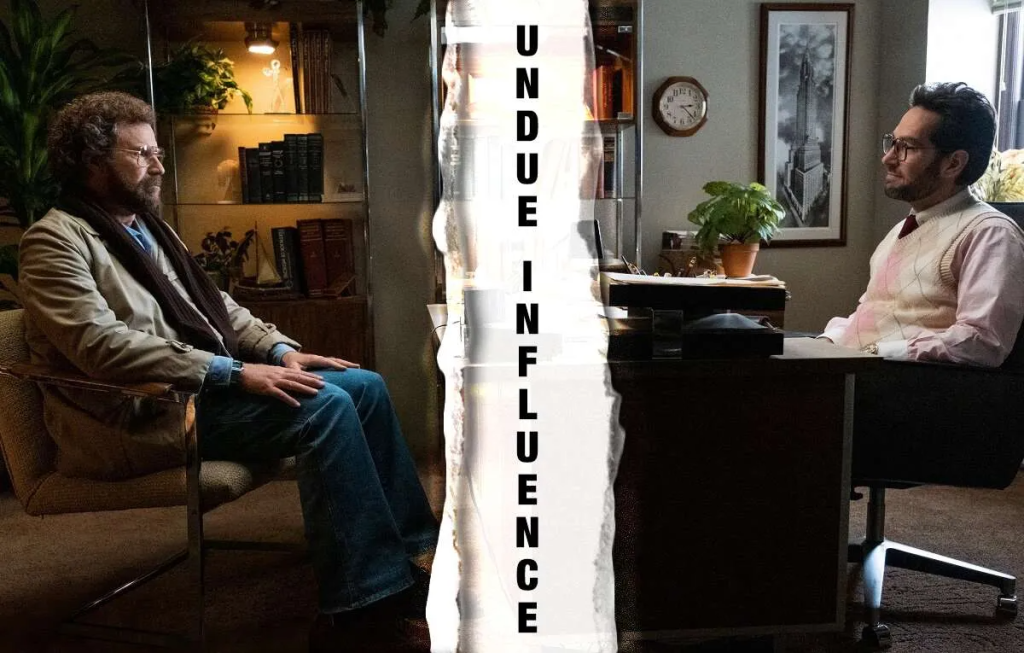
Will Farrell and Paul Rudd in The Shrink Next Door Marty Markowitz and Isaac “Ike” Hershkopf were the subject of “The Shrink Next Door,” a wildly popular podcast by journalist Joe Nocera that was adapted into an AppleTV+ limited series starring Will Ferrell and Paul Rudd. As the story goes, Marty started seeing Ike as a patient in 1981 after losing his parents and becoming overwhelmed with running the family’s fabric company. After quickly gaining Marty’s unconditional trust, Ike spent the next 30 years alienating Marty from his entire family, taking “ownership” over Marty’s Hamptons home, controlling the day-to-day operations of Marty’s business, and stealing hundreds of thousands of dollars. It wasn’t until Marty had hernia surgery that he realized Ike manipulated him and began cutting him out of his life. In 2021, after a long, ten-year battle to end Ike’s manipulative practices, Ike was forced to surrender his license to practice. Why isn’t Ike Hershkopf in prison? Since the above incident is a textbook case of undue influence, he probably should be. However, undue influence is a pliable legal term that is difficult to apply unless overwhelming evidence of a crime is present. Unfortunately, direct evidence of wrongdoing is often impossible to prove due to the tactics and secrecy enabled by the influencer over the victim. What is undue influence? Undue influence happens when a person’s decisions are hijacked or influenced by another, usually someone in a position of power or a trusted authority (such as a psychologist, caregiver, therapist, teacher, attorney, or an accountant), through coercion or manipulation for their own financial or social advantage. Undue influence targets the most vulnerable of populations, most commonly through psychological manipulation. It can come in all forms from small advertisements to cults and dictators seeking control over a population. And though some seasoned con artists may use their skills of affluence, position, and charm to manipulate someone to their will rather quickly, undue influence isn’t normally a short-term event. It generally takes months or years for the influencer to gain a strong foothold of trust with the victim. What are the signs of undue influence? Influencers perform their manipulation behind closed doors or when they are alone with their victim, so it can be hard for an outsider to witness direct manipulation. However, there are some signs to look for: Isolated from family and friends. The influencer has moved into the victim’s home or coerced them into paying for the influencer’s lifestyle. The influencer doesn’t allow the victim to speak directly to anyone, thus controlling the flow of information. The victim is dependent on the influencer to live their daily life. How can you fight undue influence? When confidential or fiduciary responsibilities are found alongside suspicious circumstances, burden of proof can be shifted to the influencer in many jurisdictions. If this happens, the influencer must now prove the victim did everything under their own volition. If you feel you’ve been victimized or know someone who may be victimized by undue influence, contact an attorney right away.

Contact Us

Fill out this form below and we'll contact you shortly
*Required Fields