Blog

All Family Law California Law Estate Planning - Wills, Trusts, and Probate Divorce Business Legal Documents Pop Culture Custody Probate Code Child Custody COVID-19 Conservatorship King Law Firm News Lawyer Guardianship Executor Legal Codes Litigation Arizona Law Holidays Marriage Beneficiary Featured Immigration Wills Fiduciary Kentucky Law LGBT Nursing Home Neglect Realty Texas Law Trusts Undue Influence Adoption Annulment Awards Books Domestic Violence Expungement Fifth Amendment First Amendment Inflation Landlords Mergers & Acquisitions Mitigation Podcast Prenuptial Agreements Reverse Isolation Self-Incrimination Social Media Summary Dissolution Videos
female legal professionals king law firm attorneys at law inc powerful litigation team

King Law Firm Attorney at Law, Inc.'s Powerful Litigation Team

In our last blog, we provided some new insight into King Law Firm Attorneys at Law, Inc.’s litigation attorney, Rachel King. But no matter how dedicated and driven she is to protecting the rights of her clients, she cannot do it alone. That’s why she has built a powerful team of like-minded, female legal professionals to help her be the fiercest advocate she can be, both in and outside of the courtroom. It begins with a team of female legal professionals Rachel has had male colleagues in the past, but she prefers to surround herself with strong, professional women. There is an inherent sense of peace and understanding that occasionally gets disrupted when men have been a part of her team. She’s also found that co-ed offices tend to be less family-oriented, causing an imbalance in work-life balance that comes with an all-female team. Her team members agree — an all-female firm has a much more caring and uplifting atmosphere. There is an air of support in and out of the office that isn’t normally found in other firms and being part of an all-female firm helps get their voices heard and empowers them in ways that a co-ed or male-dominated firm sometimes will not allow. There is a lot of estrogen, though, which could potentially lead to a lot of pent-up drama exploding at any moment. Luckily, that hasn’t happened yet. The Lone Lawyer As of this writing, Rachel is the sole litigation attorney on staff, which means she is the only person who can provide legal advice, appear in front of a judge on behalf of the client, and prepare legal strategy for each case. She would love to have a partner to help relieve some of the stress that comes with litigation, however, finding someone who has the same dedication, work ethic, and loyalty to their clients as she does is like finding an obscure term in a sea of law books. The Paralegal Trio That’s why she surrounds herself with the best paralegals. Senior Paralegal Megan Adams has been a paralegal for five years (and loves—LOVES— her caffeine); Ashton Taylor, along with being a huge San Diego Padres fan and true crime junkie, has 14 years of experience in the legal field; and French-speaking Melissa Burke has been working in the law field for a year and a half. Together, this brilliant trio of certified paralegals are integral to providing superior representation. From drafting documents to gathering detailed facts and stories from every client, the team is able to get to the root of every issue with unparalleled resolve. Along with the team’s transparent client liaison, Gloria Zahn — a natural in communicating with clients to keep them up-to-date and informed of their cases — this team of female legal professionals at King Law Firm Attorneys at Law, Inc. fully support Rachel’s main goal of helping everyone, employee and client, grow and become better versions of themselves.

the lawyer king law firm rachel king 5 facts jpg 1 - King Law Firm Inc. 6 Things You May Not Know About Rachel King

6 Things You May Not Know About Rachel King

If you have been on this website or you’re a client or friend of Rachel King, you know that she’s accomplished quite a bit in her young life. After serving in the Army for seven years as a paralegal and Communication Specialist, she earned her Juris Doctor degree from Thomas Jefferson School of Law and formed King Law Firm Attorneys at Law, Inc. shortly thereafter. But there are so many more layers to Rachel that you may not know about. Grew Up in a Family of Lawyers You could say Rachel was born into the law. Her father, Patrick King, is a practicing lawyer in Nevada and her cousin, Scott Russo, is a litigator in Orange County, California. As a child, she would “help” her dad with his cases, learning how to make strategic decisions within the confines of the law. Joined the Military Soon After Graduating High School Rachel spent a few months in college, but realized early on she wasn’t mentally ready for the work needed to become a lawyer. Without a job, money, or a place to live, she decided to join the military. Her decision came shortly after 9/11, so her family had mixed feelings, but the decision taught her the discipline she needed to embrace the suck in all aspects of her life. She Was Sued When She Was 21 Though the lawyer she had after being sued made her feel small, ineffective, and dumb, the experience gave her insight into how she didn’t want to practice law. She learned how to be fierce, but kind, respected, but feared, and led her to be humble, approachable, relatable, and trustworthy. It’s also why she is always upfront with her clients about concerns she may have and the emotional toll their case may have on them and their family. Has a Quarterly Mandatory Fun Day at the Firm A team is only as good as its weakest member. To keep her team in peak mental condition, Rachel plans a mandatory event each month for her staff. Whether it’s going to a spa, an escape room, a paint and sip, or a simple lunch, getting them out of the office for a day of team building helps build comradery, raises morale, and strengthens the foundation of the firm. Is an Avid Runner and Hiker For Rachel King, exercise is her opening statement, helping her start the day on the right path. Routinely running and hiking maintains her mental and physical health, clears her mind and releases the extreme amount of stress that comes with the job. Is a Literature and Writing Major and a Very Avid Reader Rachel reads every day before bed. Though her favorite genre is historical fiction, her favorite nonfiction books include Born to Run: A Hidden Tribe, Superathletes, and the Greatest Race the World Has Never Seen by Christopher McDougall and the recent New York Times Bestseller Breath: The New Science of a Lost Art by James Nestor. Bonus: Rachel may be the only lawyer who doesn’t drink coffee!! “What I really did find, whether it was working out or anything, is letting myself be okay with only doing that one step, knowing subconsciously that once I do that step, it’ll keep going.” — Rachel King

2023 laws in arizona california texas and kentucky

3 Important 2023 Laws in California, Arizona, Texas, and Kentucky

Once again, as a new year begins, a bevy of new laws across the nation have officially gone into effect. Below are three important 2023 laws in California, Arizona, Texas, and Kentucky that residents of each state should know. California AB 2011, also known as the Affordable Housing and High Road Jobs Act, allows for expanded housing to be built in areas currently zoned for commercial property. Unused retail spaces, office buildings, and parking lots can now be transformed into affordable housing and residential communities without the need to go through local approval processes. Almost every state will be raising its minimum wage this year. SB 3 will be raising California’s minimum wage to $15.50, but more importantly, AB 257, also known as the FAST Recovery Act, creates a council made up of workers, employers, and government officials. This council will set rules regarding minimum wage standards and other working conditions for fast food chains with at least a hundred employees nationwide. If someone has served time after Jan 1, 2005, SB 731 will allow that persons record to be expunged. Those with past violent felonies or who have been convicted of a felony within four years of the request may not be automatically eligible but may still petition for expungement. Arizona The minimum wage in Arizona is directly tied to inflation. Due to the current rate of inflation between August 2021 and August 2022, the minimum wage will increase $1.05 to $13.85. ARS 13-911 follows in the footsteps of California’s SB 731, except only those who are arrested and/or convicted after December 31, 2022 are eligible to petition the court for expungement. One year before it was originally scheduled to take effect, Arizona’s 2.5% income tax will dissolve Arizona’s current 4-tier tax structure into one flat rate for all citizens. Texas The court system in Texas is getting a major overhaul. HB 3774 creates new district, statutory county, statutory probate, and criminal law courts, will allow public access to the state court database, and changes certain regulations and how some proceedings are handled. SB 12 reduces the amount of ad valorem taxes—or taxes based on the assessed value of real property—that a school district can impose on elderly or disabled residents. As an amendment to the Texas Clean Air Act, SB 1210 forbids the prohibition of hydrofluorocarbon refrigerant substitutes during construction of residential and commercial buildings. Kentucky The first of 230 new 2023 laws in Kentucky going into effect, HB 9 creates a new model for funding charter schools. These schools may now receive tax dollars from both local and state levels. To help students in higher education, colleges and universities in Kentucky must increase the due process protection rights for students under HB 290. Finally, HB 7 will require individuals to prove to the Cabinet for Health and Family Services that they are working or volunteering in some capacity to receive public benefits. It will also impose stricter penalties for those abusing food assistance programs.

king law firm attorneys at law new litigation attorney website

King Law Firm Attorneys at Law, Inc. has Shifted Focus

Not all legal issues can be settled out of court. That is when you need a knowledgeable litigation attorney who understands how to file all legal paperwork, navigate the court room, prepare opening and closing remarks, and prioritize the client above all else for an advantageous outcome. If you have visited our website over the past month, you will have noticed some big changes — a fresh, sophisticated design, bolder colors, and of course, a major change in focus to becoming a full litigation attorney. A few months ago, we announced that we wanted to continue to help as many people as possible navigate legal issues but do so with a shift from general law to trial litigation. Our core services in probate and trust, family law, and real estate did not change, only our focus in representation. Some additional new features on our website include: Streamlined information that allows users to find exactly what they need without trudging through pages of superfluous and excessive content. Cleaner navigation that helps users find their way around the site with ease The ability to quickly search the site for whatever our users need. New litigation services that include elder law, elder abuse, beneficiary protection, move-away, pension and stock, child protective services (CPS), adverse possession, encroachment, and partition actions, among others. All social media links for easy access to follow and communicate with the King Law Firm Attorneys at Law, Inc. team on Facebook, Twitter, Instagram, LinkedIn and Tik Tok. Rachel King’s Featured Appearances, where lead attorney Rachel King discusses her craft as a trial litigator on her podcast and other special appearances. As always, King Law Firm Attorneys at Law, Inc. aggressively defends the rights and interests of our clients. We now strive, though, to make all our clients feel comfortable and confident when entering the court room and are always a fierce advocate for them in every negotiation, trial, and appeal that takes place in front of a judge or mediator. Our professional litigation attorneys also understand that the unique and diverse legal challenges our clients face aren’t always financially practical. This is why we also offer payment plans for those who may struggle financially. We are excited about the future of King Law Film Attorneys at Law, Inc. and all our highly qualified litigation attorneys and paralegals look forward to helping everyone in California, Arizona, Texas, and Kentucky fight their legal issues with powerful, strategic trial litigation.

estate plan manipulation king law firm - King Law Firm Inc. 5 Estate Planning Red Flags

5 Estate Planning Red Flags

Planning for one’s death is important to avoid time consuming and often costly probate. However, creating a will or trust can be easily subject to undue influence. The client may not even know they are being manipulated. When the drafting of an estate plan begins, an ethical estate planning attorney will always be on the lookout for estate planning red flags that may hinder a person from signing, isn’t in their own best interest, or that will lead to costly or manipulated probate proceedings. 1. Medical or Cognitive Impairment The one key proponent for any legal document is the ability to sign under a sound mind. If after one’s death it’s discovered that the signer was not of sound mind when they signed the document, it could lead to costly litigation. When an individual drafts a will, always make sure they are not mentally impaired or living in a mental care facility. 2. Odd Changes After an estate plan is completed, large or irregular changes might prove that the signer is being manipulated into altering it. Changes that might raise a red flag include the disinheriting of a family member, adding someone out of the blue, or shifting major assets from one person to another. 3. Who Made the Appointment and Who is Making the Decisions It is always in the best interest of the person creating the will for that person to actively want to create the will on their own. If a family member, friend, intermediary, or nurse sets up the appointment and is making all the decisions for the signer, those decisions are probably not the true wishes of the signer. 4. The Creation and Signing is Being Rushed Creating an estate plan should not be an urgent matter. There are a lot of considerations to make that might be overlooked if the will or trust is rushed through the process. Family or friends who may be eager to get a will signed, refuse to answer questions for expediency, or are trying to rush the process in any way do not have the best interests of the signer in mind. 5. Property with Joint Tenancy is Encouraged Attempting to add assets into a will or trust that are jointly owned will do nothing but cause major issues during probate. Anyone pushing to include jointly owned property, such as a home, car, bank account, or even debt, may simply be looking to force a contention, which will lead to long, drawn-out and expensive probate hearing. One of the above estate planning red flags on its own probably isn’t enough to keep an ethical attorney from drafting a will. However, if multiple factors arise, the motivations behind the estate plan must be addressed to determine the client’s capacity to create and sign the document and guarantee the estate plan isn’t being created under undue influence.

Litigation courtroom behind judge

The Advantages and Disadvantages of Litigation

Litigation may seem exciting on television: someone gets served, they run to an attorney, things get dramatic as both sides introduce explosive new evidence, and 45 minutes later, new information suddenly arises that helps win the case. Everything goes back to normal. Unfortunately, litigation in the real world rarely happens that smoothly. Litigation is a stressful process that could take days, months, or in some cases, years to complete. Most people would much rather settle out of court as quickly as possible. And though this may work well in some cases, no matter how stressful it may seem, litigation can be advantageous, even necessary at times, to preserve your rights. Advantages of Litigation Firm Resolutions: Many disputes cannot be resolved through alternative dispute resolutions (ADR). Litigation provides a clear outcome in a public forum, so even though each party may feel they are in the right, a judge will use facts and evidence to determine a clear resolution. Sets Precedent: If you believe a lawsuit may repeat itself over time, having a defined resolution will help to fight similar claims in the future. It can also help effect change by setting precedent for others who may find themselves in the same situation. Stricter Evidence Guidelines: During ADR, evidentiary power is usually in the hands of the arbiter, so biases can become an issue. Courts, on the other hand, have much stricter rules when it comes to how evidence is collected and presented. Litigation also helps force the hand of those unwilling to provide requested evidence with court-mandated guidelines and penalties for non-compliance. Appeals: Should you feel a mistake was made or the court was in some way biased against you during your case, you have the right to appeal the case to be heard in a higher court. In ADR, results are generally final, no matter what happens. Disadvantages of Litigation Time Consumption: As previously mentioned, court hearings take time. With all the myriad of lawsuits being filed every day, there isn’t enough time to hear them all in a timely manner. It could take months to simply get your case in front of a judge. Stressful: As you wait to get this dreadful monkey off your back, the stress of the situation can weigh heavily on your mind, causing you to lose a step-in business and in life, which could lead to additional problems. Damaging Relationships: Litigation can be emotionally draining and effect your relationships in a negative way. Distraction can lead to ignoring immediate family members or picking fights with close friends and relatives. Neutral Benefits Costs: Although litigation can become somewhat expensive, and there’s no guarantee you will be able to recover all your legal fees should you win, some litigation can be cheaper than going through ADR. Before deciding on whether you should go to court or try something else first, speak to an attorney about what is best for your specific circumstance.

socialmedia 405491786 - King Law Firm Inc. An Unbiased Look At Social Media Censorship Regulations

An Unbiased Look At Social Media Censorship Regulations

The advent of social media is still relatively new. In its infancy, it was like a shiny new object; there was everything to love and nothing to hate. As it grows, though, and the honeymoon phase ends, people are at odds with how social media companies should operate. This is especially true as it relates to community standards, moderation, and censorship regulations. Contradictory decisions on two similar laws in Texas and Florida clearly highlight the issue regarding what free speech means and how it should be enforced when it comes to social media censorship. Texas Bill H.B. 20 and Florida Bill S.B. 7072 H.B. 20 and S.B. 7072 are similar in their quest to end social media censorship. Both bills prohibit social media companies with at least 50 million active users from being able to ban or demonetize content or users because of the user’s viewpoint. The 11 th Circuit Court of Appeals ruled against S.B. 7072, while the 5 th Circuit Court of Appeals upheld H.B. 20. Opponents of H.B. 20 and S.B. 7072 argue that: The First Amendment protects citizens from government censorship of speech, not a private company’s censorship of speech. Government cannot compel a private company to print/publish speech that goes against their posted community standards. Social media platforms have an obligation to provide a safe community for its users, free of misinformation, fake news, conspiracy theories, propaganda, and hate speech. Algorithms setup by social media platforms to stop misinformation and propaganda campaigns cannot be biased against one side or another. The Federal Government should continue regulating these measures to make sure social media platforms remain protected from rampant abuse. Supporters of H.B. 20 and S.B. 7072 argue that: The First Amendment protects free speech regardless of whether it’s censorship by a government or a private company. The line between the Federal Government’s involvement in the moderation of content has blurred so much, there may no longer be a difference between the platform and the Government. Who is the arbiter of what constitutes misinformation, fake news, conspiracy theories, propaganda, and hate speech? There are already practices in place for the users to moderate the content they see on their own; No one person or company should be allowed to dictate what is or isn’t misinformation. Algorithms and AI entities are only as neutral as the person who develops them; if a developer is strongly biased against one side or another, they can infuse those biases into the code and “learn” specific societal biases. If social media companies are private entities, the Federal Government should remove themselves from regulating or helping these platforms altogether. It’s hard to know what side is right or if both sides have a point. It may all depend on the Supreme Court to officially decide this argument. Regardless of what side you’re on, we can all probably agree on one thing: death threats, violence, posting or live streaming murder or other deviant material, and child pornography and endangerment should always be banned with prejudice and not be considered part of social media censorship.

undue influence marty markowitz isaac ike hershkopf shrink next doortherapist financial finance manipulation

A Case of Undue Influence

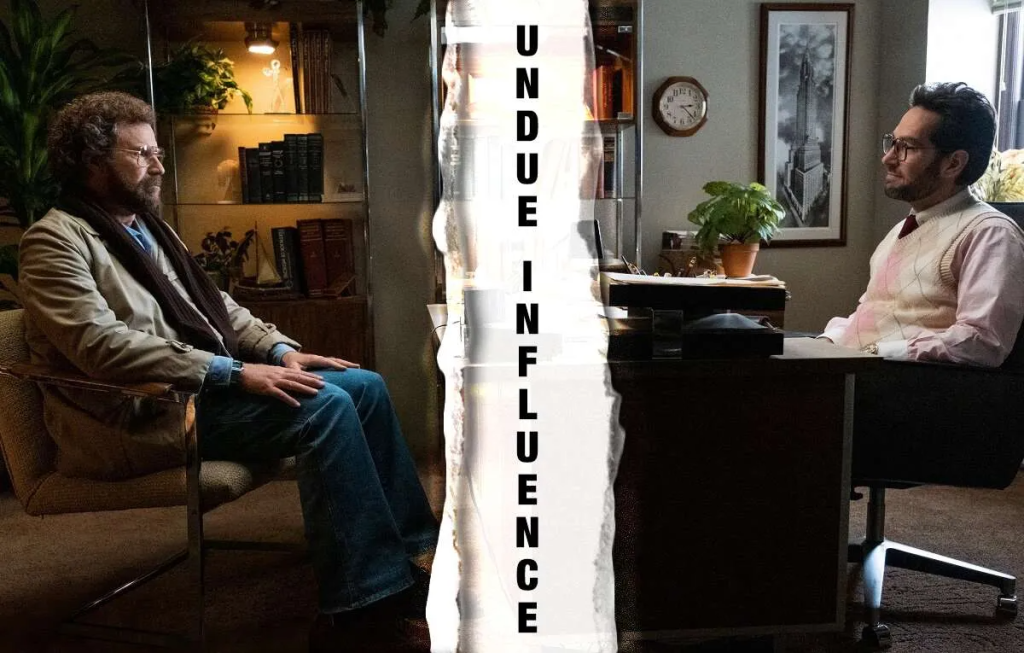
Will Farrell and Paul Rudd in The Shrink Next Door Marty Markowitz and Isaac “Ike” Hershkopf were the subject of “The Shrink Next Door,” a wildly popular podcast by journalist Joe Nocera that was adapted into an AppleTV+ limited series starring Will Ferrell and Paul Rudd. As the story goes, Marty started seeing Ike as a patient in 1981 after losing his parents and becoming overwhelmed with running the family’s fabric company. After quickly gaining Marty’s unconditional trust, Ike spent the next 30 years alienating Marty from his entire family, taking “ownership” over Marty’s Hamptons home, controlling the day-to-day operations of Marty’s business, and stealing hundreds of thousands of dollars. It wasn’t until Marty had hernia surgery that he realized Ike manipulated him and began cutting him out of his life. In 2021, after a long, ten-year battle to end Ike’s manipulative practices, Ike was forced to surrender his license to practice. Why isn’t Ike Hershkopf in prison? Since the above incident is a textbook case of undue influence, he probably should be. However, undue influence is a pliable legal term that is difficult to apply unless overwhelming evidence of a crime is present. Unfortunately, direct evidence of wrongdoing is often impossible to prove due to the tactics and secrecy enabled by the influencer over the victim. What is undue influence? Undue influence happens when a person’s decisions are hijacked or influenced by another, usually someone in a position of power or a trusted authority (such as a psychologist, caregiver, therapist, teacher, attorney, or an accountant), through coercion or manipulation for their own financial or social advantage. Undue influence targets the most vulnerable of populations, most commonly through psychological manipulation. It can come in all forms from small advertisements to cults and dictators seeking control over a population. And though some seasoned con artists may use their skills of affluence, position, and charm to manipulate someone to their will rather quickly, undue influence isn’t normally a short-term event. It generally takes months or years for the influencer to gain a strong foothold of trust with the victim. What are the signs of undue influence? Influencers perform their manipulation behind closed doors or when they are alone with their victim, so it can be hard for an outsider to witness direct manipulation. However, there are some signs to look for: Isolated from family and friends. The influencer has moved into the victim’s home or coerced them into paying for the influencer’s lifestyle. The influencer doesn’t allow the victim to speak directly to anyone, thus controlling the flow of information. The victim is dependent on the influencer to live their daily life. How can you fight undue influence? When confidential or fiduciary responsibilities are found alongside suspicious circumstances, burden of proof can be shifted to the influencer in many jurisdictions. If this happens, the influencer must now prove the victim did everything under their own volition. If you feel you’ve been victimized or know someone who may be victimized by undue influence, contact an attorney right away.

dissolve wedding king law firn attorneys at law annnulment divorce dissolution - King Law Firm Inc. Annulments – A Primer

Annulments – A Primer

Back in 2019, Nicolas Cage married his then girlfriend Erika Koike after “drinking to the point of intoxication.” Cage, as a lot of people do when in the throes of infatuation, acted on impulse. Four days later, he claimed the marriage was fraud as he was not fully aware of the extent of a relationship between Koike and another person, nor did she disclose her criminal history. Throwing caution to the wind and getting married in front of an Elvis impersonator at a small chapel just off the strip happens all the time. Your first instinct upon realizing what happened the next morning may be to get the marriage annulled as fast as possible. But what happens when you decide to get married in a state like California and have come to regret the decision, or previously undisclosed information suddenly comes to light? Is annulment right for you? First, you must understand the difference between annulment and divorce Annulment declares a marriage was never valid. Under the law, the marriage never existed. Divorce is a legal dissolution or termination of a valid marriage. The marriage will always be recognized as having existed under the law. California Requirements for Annulment Unlike a divorce, in which a specific reason for wrongdoing is unnecessary to begin the process, someone filing for an annulment in California must prove under oath that the statute of limitations has not passed and at least one of the following requirements are met: Related – The parties are found to be related by blood. (No limitations.) Bigamy – One party was already married to someone else at the time of the marriage. (Must file while the previous spouse is still alive.) Underage – The person filing was under 18 at the time of the marriage. (Must file within four years of turning 18). Fraud or Force – Fraud was involved that goes to the essence of why the marriage occurred, or one party was forced into the marriage. (Must be filed within four years from the discovery of the fraud.) Physical Incapacity – One party is unable to consummate the marriage. (Must file within four years of the marriage.) Unsound Mind – One party has a mental illness that keeps them from understanding the concept and duties of a marriage (Must file before one or the other party has died; a conservator may also file in this instance.) Other Considerations Other considerations one might take into account when deciding whether to file for an annulment are asset division, spousal and child support, and custody. Because annulment invalidates the marriage, property isn’t protected as it is under a divorce, nor are you guaranteed spousal support or survivorship benefits. Filing If you meet at least one of the above requirements, it is best to speak to an attorney about filing the paperwork. However, if you wish to file on your own, go to https://selfhelp.courts.ca.gov/divorce-california/annulment/start for more information or download the paperwork at https://www.courts.ca.gov/1246.htm.

Divorce assets split king law firm attorneys - King Law Firm Inc. SPECIAL BLOG! Uncoupling—Now What? King Law Firm Has Answers!

SPECIAL BLOG! Uncoupling—Now What? King Law Firm Has Answers!

What happens after and uncoupling? You have questions; we have answers. I want to pretend my marriage never happened. Can I get it annulled? As unromantic as it sounds, marriage is, in part, a business arrangement. Simply wanting to pretend it did not happen or being unhappy is not enough to annul a marriage. No worries though. No matter how short or long you have been married, California is a no-fault divorce state, and you are entitled to a divorce if you want one. If you are considering an annulment, speak with an attorney to see if you can; otherwise, divorce it is. My ex is dragging out the divorce process and I am ready to get remarried. Is there a way to stop this? This is a super frustrating situation. Divorce is emotionally taxing, mentally draining, and can be financially devastating. So when you are done, you want to be done. You can ask the court to grant you divorce status so that you are legally single, even if you haven’t figured out all the property, support, custody, and other issues. You can also ask the court to start moving the case toward trial if it doesn’t look like you will reach an agreement. My ex is cohabitating and I am paying spousal support. Is there anything I can do? First, look at your divorce judgment to see what it says. In many cases you will be able to modify spousal support if your ex is living in a marital type relationship and has established a new standard of living. You may also be able to modify spousal support if the need for spousal support goes down. For example, someone else is assisting with their bills or they are making more money. I am in the middle of a divorce. If I die now, who inherits? It depends. Simply filing for divorce or being in a divorce proceeding does not change who inherits. Therefore, your current Will or Trust will stay in control. If there is neither of those, then your spouse will inherit some of the community and separate property. If you are getting divorced or separated, it is important to revisit your estate plan so that you can make sure that the people you want to inherit do so properly. 11 years together – never married – and we just separated. What happens now? Marriage certainly has its benefits. One is making sure that each person has rights to property and support. California does not recognize common law marriage, so if you are not legally married you are not married. This means that on separation you can take what is yours. But if there is any jointly owned property, you will have to file a civil lawsuit. Family law courts do not handle the division of non-marital property, but they will handle child custody, visitation, and child support, even when you are not married. My dogs are my family. How will the family law court treat my dogs? In 2019 California passed AB2274, a law that requires family law courts to award custody of a pet based on what is in the pet’s best interest. This could be individual or shared custody agreements. The law is specifically directed at pets. Therefore, I recommend individuals with animals reach out to a family law attorney to determine how the laws can help protect their animals and pets. Do you have questions about your current situation? Need solid advice and advocacy? Rachel King is an attorney licensed to practice law in California, Arizona, and Kentucky. She is the supervising attorney at King Law Firm Attorneys at Law, Inc. Throughout her career she has represented thousands of clients and is an experienced trial attorney. Rachel is a down-to-earth, fierce, and trustworthy advocate for her clients. Contact her today!

4 Steps for Adoption Guardianship King Law Firm Attorneys at Law

4 Steps for Adopting Your Ward

Becoming a guardian is an admirable thing to do. Guardianship protects children but does not strip away the rights of the biological parents. In other words, once the parents are again able to provide the child a safe environment, the child may return to them safely. However, there may be occasions when the biological parents are never able to properly care for their child. When this happens, it may be time to sever all rights the biological parents may have by officially adopting the child. Below are five steps to go from guardianship to adoption of a ward. 1. Ask the child if they would like to live with you permanently Depending on their age, the court may ask the child directly if they would like to be adopted. Talking to the child about what adoption would mean and why you would like to adopt them makes sure they are mentally ready for the next steps, and that it is the right course of action. If the child is younger, having this conversation with them will ensure that what you are doing doesn’t frighten them or cause friction later. If the child is closer to 18, it may be best to remain a guardian. 2. Contact an adoption lawyer If both the guardian and the child are in agreement that adoption is appropriate, the next step is to hire an adoption lawyer. This will help ensure the process runs smooth and that all paperwork is done correctly. A good adoption attorney will also walk you through the process with ease and help fight for you when it comes to objections from the biological parents. 3. Obtain a home study In California, the guardian must first obtain a home study to adopt a child. A home study helps the state verify that the home is stable, answers any questions you may have, and helps you understand all adoption opportunities. The process may feel overwhelming at first, as it requires individual interviews, home visits, background checks, physical exams, and the verification of financial and employment records, but it’s the best, most thorough way to verify the adoption is in the best interest of the child. 4. Finalize the guardianship to adoption process in court Whether the biological parents voluntarily agree to terminate their parental rights or the court mandates such termination, the final step for adoption is getting a judge to finalize the adoption. Contact King Law Firm Attorneys at Law, Inc. for more information and a complimentary consultation.

Relocating To a New State as a Guardian or Custodian of a Child

Relocating To a New State as a Guardian or Custodian of a Child

People change, jobs change, environments change. When you have children, these changes can become complicated and stressful, especially if it means relocating a child out of state. Whether you have custody or guardianship over a child, if another parent or family member is still in the picture, moving with a child can become complicated, especially if one fails to adhere to court agreements. Below are a few things to know before deciding to move a child out of state. Custody vs. Guardianship Custody is when someone has full (or shared) responsibility over a child. Sole custody gives the bulk of the responsibility to one parent (and visitation to another) while joint custody gives responsibility and shared living arrangements to both parents. Guardianship, meanwhile, grants responsibility of a child over to a non-biological caretaker. This means the biological parents may still be in the picture but have been deemed unable to provide a healthy life for the child. Relocation as a Primary Custodial Parent Whether moving for a job, a change of scenery, or a better education, the primary custodian (aka the parent for which the child lives the most) should review the custody arrangement before making any final decisions. If the primary custodian is moving outside of a court-approved radius, they must provide the court and the non-custodial parent written notice about their decision 45 days prior to the move. This gives the secondary custodian time to contest it. Parents with sole custody usually have a presumptive right to move out of state, however, a parent with joint custody who wants to move a child out of state must file a move-away order. Factors a judge will consider during a move-away hearing include: The distance of the move The emotional, environmental, educational, and physical needs of the child The child’s relationship with the parents Whether there’s a support system in place in the new location If granted, the move-away order would force the modification of the original custody arrangement, which may not always go in favor of the primary custodian. Relocation as a Guardian Unlike custody, guardianship is much more involved when choosing to move a ward out of state. In California, the guardian must fill out the following forms and submit them to the court 45 days prior to moving: Petition to Fix Residence Outside of the State of California (Form GC-085) Notice of Hearing – Guardianship or Conservatorship (Form GC-020) Order Fixing Residence Outside of the State of California (Form GC-090) These forms must also be served to all interested parties, including the biological parents, within 15 days of the move. Should an interested party object, a hearing will decide if relocation is in the best interest of the child. If the move is granted, the guardian will need to file for guardianship in the new state and relinquish their guardianship in the old state. If this all seems overwhelming, contact a family lawyer who can help mitigate the stress.

Contact Us

Fill out this form below and we'll contact you shortly
*Required Fields