Blog

All Family Law California Law Estate Planning - Wills, Trusts, and Probate Divorce Business Legal Documents Pop Culture Custody Probate Code Child Custody COVID-19 Conservatorship King Law Firm News Lawyer Guardianship Executor Legal Codes Litigation Arizona Law Holidays Marriage Beneficiary Featured Immigration Wills Fiduciary Kentucky Law LGBT Nursing Home Neglect Realty Texas Law Trusts Undue Influence Adoption Annulment Awards Books Domestic Violence Expungement Fifth Amendment First Amendment Inflation Landlords Mergers & Acquisitions Mitigation Podcast Prenuptial Agreements Reverse Isolation Self-Incrimination Social Media Summary Dissolution Videos
Understanding the role of executor shows a man's hands separating mock asets, like a piggy bank, a toy home, and coins.

5 Keys to Understanding Your Role as Executor or Administrator

On paper, becoming an executor or administrator of someone’s estate means you’ve been entrusted to take on an enormous responsibility. Some may consider it an honor… but before you accept this relatively unenviable task, it’s best to understand the key factors of what the job itself entails. Key Factor #1 - Understanding the Difference Between Executor and Administrator The executor and administrator basically have the same role to play—assess, safeguard, and distribute the decedent’s assets. The main difference: an executor is named in the will and must adhere to the wishes set forth in the will while an administrator is appointed by the court in the absence of a will or when there is no executor named. ( From here on out, both the executor and administrator will be referred to as an executor.) Key Factor #2 – Understanding the Workload Whether the estate is big or small, the executor is responsible for safeguarding and distributing assets, notifying creditors and other interested parties, paying debts and taxes, filing court documents, keeping accurate records, and defending the estate against legal claims and beneficiary disputes. And that’s just the tip of the iceberg. Handling these responsibilities is time-consuming as well. A simple estate with absolutely no conflicts may take up to a year to resolve while more complicated or larger estates take two or more years. If there’s any consolation, the executor can be compensated based on either an amount designated in the will or by the state in accordance with applicable laws. Key Factor #3 – Understanding The Challenges The executor will face a slew of challenges while administering the decedent’s wishes. This includes navigating complex legal issues, tackling disputes with creditors, refereeing conflicts among family members, locating missing assets (or heirs), and keeping heirs from stealing heirlooms prior to beginning probate. Key Factor #4 – Understanding the Emotional Toll With the heavy workload and slew of challenges inherit in probate, this process can easily become emotionally taxing. Prioritizing self-care and setting realistic expectations are a must so you can properly grieve. Key Factor #5 – Understanding Limitations/The Fiduciary Duty Executors are limited by their fiduciary duty to the estate in what they can and cannot do. First and foremost, executors are obligated to act in the best interest of the estate and defend its intent in all disputes. Once appointed, executors also become liable for any misappropriation of assets or blatant misconduct. In a nutshell, the executor’s fiduciary responsibility keeps them from: ignoring provisions of the will. selling property for less than fair market value. prioritizing their own interest over that of the estate. paying themselves more than the allocated/lawful amount. using estate funds for personal gain. And, as with any law, ignorance does not excuse the executor from a breach of these duties. Remember, even if named as executor in the will, you may request to be “passed over” before probate is granted. For more information and to help you through the complicated process of probate, check out our Complete Executor Duties Checklist.


California probate - a 6 step process; a brown paper having been ripped to show a group of people going over paperwork with the word Probate across them.

Probate in California: A 6-Step Process

Grieving a loved one is painful. Unfortunately, the state doesn’t care—they still expect you to complete the daunting probate process within a year of your loved one’s death. But where to start? 1. File the Probate Petition The first step is to file a request to begin probate with the court. Fill out form DE-111, which includes nine main sections disclosing the petitioner and decedent’s information, who the heirs and beneficiaries are, and whether the decedent was survived by a spouse. Additional paperwork to attach to the petition include a certified copy of the death certificate and the original copy of the will, if possible. Check with your county registrar to see if you can e-file your petition or must file with the superior court in person. 2. Notify Heirs and Creditors It is the job of the executor (or representative if petitioning intestate) to inform all beneficiaries and creditors once the petition is filed. This is a crucial step; any missed notifications may delay the court’s approval. All notices to beneficiaries must include the date, time, and location of the hearing, as well as a receipt of delivery. If there is no will, the appointed representative must locate any beneficiaries or find out what happens to the decedent’s estate in the absence of heirs. The executor must then publish notice of the probate filing in a newspaper to make sure all interested parties are informed. A proof of publication must also be filed with the court. 3. Manage the Estate Collecting Assets The executor must document and collect all assets. A court-appointed “California Probate Referee” will also be assigned to value all assets appropriately. Paying Debts Any outstanding loans, funeral payments, utilities, and other liabilities must be paid. Some debts may be deferred or canceled, such as mortgage debts, Medicaid benefits, or student loans, while others may be protected from creditors or covered by insurance. Handling Taxes All applicable federal and state taxes (income and estate) must be paid. If the estate doesn’t have enough assets to pay for these debts, a declaration of insolvency must be made. Remember, if the estate isn’t managed correctly, or debts are mishandled, the executor may be held personally liable. 4. File Reports It is required, in conjunction with step three, to periodically submit reports detailing all activities and progress. 5. Final Distribution Once all assets have been collected, all debts and taxes paid, and all disputes resolved, it’s time to distribute the remaining assets. The executor will file a petition for final distribution to the court, which will include the final accounting report and proposed judgement of final distribution. Once approved, the executor will distribute the assets and submit receipts signed by the beneficiaries. 6. Closure Upon the conclusion of final distribution, the executor will file a petition for final discharge, releasing them of any personal liabilities related to the estate and closing the case. For assistance in completing your probate, check out our Probate Timeline Checklist and/or call for a consultation.

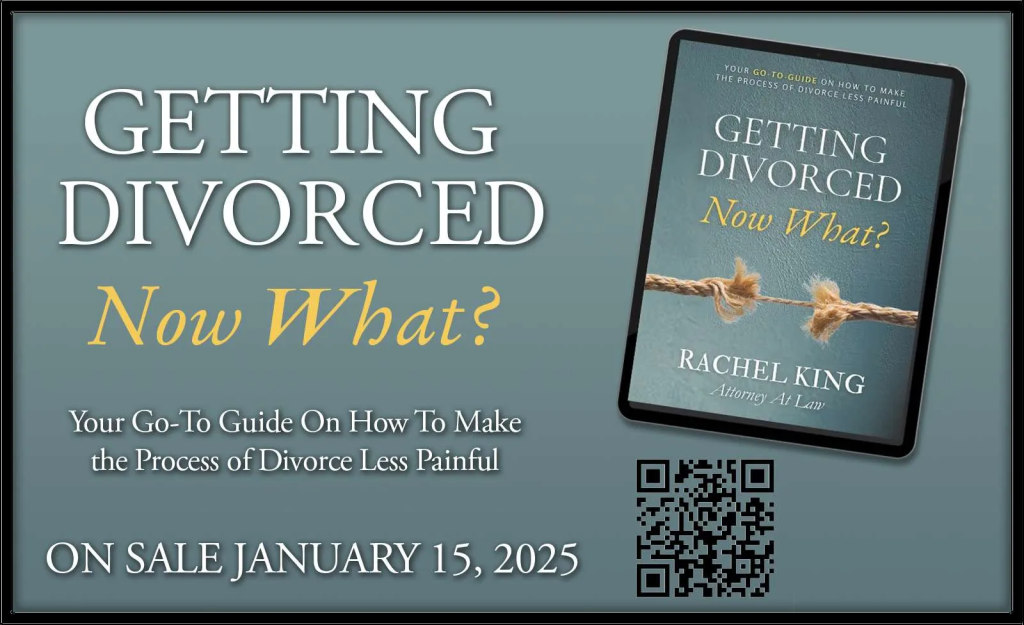
Getting Divorced... Now What? advertisement with book cover and QR code announcing sale on January 15, 2025

Getting Divorced… Now What? – Buy It January 15th, 2025

“When faced with the question of whether you should stay in a marriage, difficult emotions are bound to arise…. Despite the emotions involved, a life-changing decision needs to be made when considering the financial, emotional, and legal implications specific to your situation. The first question you should ask is: ‘Should I file for divorce or repair my marriage?’.” Thus begins Getting Divorced... Now What?, a new go-to guide on making the process of divorce less painful. Life And Expectations Change No one expects they will be heading for divorce when they say yes to a proposal from someone they deeply love. But life, growth, and experience inevitably change people, and if one’s spouse is unable to accept those changes, divorce also becomes inevitable. Whether the divorce is amicable or catches one party off-guard will determine how complicated and emotionally devastating this life-changing event becomes. Getting Divorce… Now What Written by family law and litigation attorney Rachel King, Getting Divorced... Now What? explores the many complexities of divorce. Her main goal in writing the book was to compile what she’s learned over ten years of representing and witnessing thousands of family court cases into a compassionate, relatable roadmap for those who may not be able afford an attorney. It provides the tools necessary for anyone contemplating divorce—or in the midst of one—to confidently navigate the rigors (emotional and legal) of divorce and simplify the complicated chapter of their life. Real-Life Stories One key element of Getting Divorced… Now What? are real-life anecdotes and stories that offer a sense of relief, letting them know that they are not going through their divorce alone. Here’s a quick excerpt of one story (names and facts have been altered to protect the individuals involved): “Meet Sarah and John: They live in the heart of a bustling city, amidst the chaotic rhythm of life. They married at 23 years old, right after college, deeply in love, and quickly started their family. Now, thirteen years later, life is taking its toll on their marriage…. She finds herself overwhelmed, and her marriage is feeling the brunt of it. She is torn between wanting to save the marriage, or realizing that maybe it's too late, and it’s time to move on. A lot has happened over fifteen years. She is exhausted and not sure if she is emotionally willing to invest another day in her marriage.…. Their journey began like a fairy tale, with stolen glances, and promises of forever. Yet, as time and life unfurled its complexities, cracks began to form in the once-solid foundation of their marriage. Sarah, with her heart heavy with burden, finds solace in the silent confinements of her therapist's office. Should she stay or should she go?” You Are Not Alone With many anecdotes, stories, and practical and authoritative information from Rachel King’s ten years of experience, by the time you’re done reading Getting Divorced… Now What?, you will no doubt believe “You are not alone, and you will survive!” Take your first step towards healing and empowerment by checking out a free chapter of Getting Divorced… Now What? And look for the book when it’s released on January 15, 2025. Get answers to all of your burning questions about Getting Divorced… Now What? Disclaimer: Getting Divorced… Now What? is not a replacement or substitute for legal advice. You should speak with an attorney in your jurisdiction to get legal advice on your case. The book is not legal advice and is not intended to be legal advice. The book is for informational and entertainment purposes only. Buying, reading, or otherwise using this book does not establish an attorney-client relationship, nor does it constitute legal advice.

a pair of adult hands holding a pair of child hands holding a wooden model of a house representing Adding Your Child to the Title of Your Home

Advantages and Disadvantages of Adding Your Child to the Title of Your Home

Probate is oftentimes a long, costly process, especially when bequeathing a house. The best way to avoid your home being placed in probate is to setup a living trust. However, some believe the best way to transfer a home to their child without probate is to add them to the title of their home. The problem is the drawbacks far outweigh the benefits. What are the benefits of adding your child to your home’s title? Since transferring a home by adding a child to the title gives the child co-ownership, the  main benefit, as mentioned before, is to reduce probate costs due to automatic inheritance. Is this temporary, upfront relief enough to negate the disadvantages of adding a child to the title of your home? Taxes and costs When adding your child to the title of your home, they are only inheriting half of the current value and half of the original purchase price (also known as the basis) of the home. This means that when the child sells the home, they will need to pay capital gains tax on the difference between the basis and the sale price. And because this action is considered a gift in the eyes of the IRS, you will need to file a gift tax return. To avoid these tax burdens, you can do one of two things: add your child to the title of your home through a bare trust and gift of survivorship. However, due to several government reporting requirements, this can also become extremely costly. File a parent/child exclusion form and homeowner’s exemption. Legal Rights Another disadvantage comes in the form of your legal right to the home. By adding your child to the title any sale or change will need their approval. Creditors Do your due diligence when it comes to your child’s debt before adding them to the title of your home. If you don’t you could be opening the door to a creditor’s ability to place a lien on the property, acquire your child’s portion of the asset, foreclose on the home, and force you to sell. Litigation What if you have more than one child? Adding just one child to the title may lead to arguments, resentment, and long, drawn-out estate litigation. What’s the best alternative to adding your child to the title of your home? A more effective pathway to transfer property is to put it into a living trust. Not only will the majority of disadvantages vanish, but this allows for a step-up in basis, which means the child will now inherit the home at its current value, and upon sale, will owe little to no capital gains taxes. We all want to give our children the best future possible, so before making any big decisions, make sure to consult a trustworthy estate planning or probate attorney to setup the best path for your child’s future.

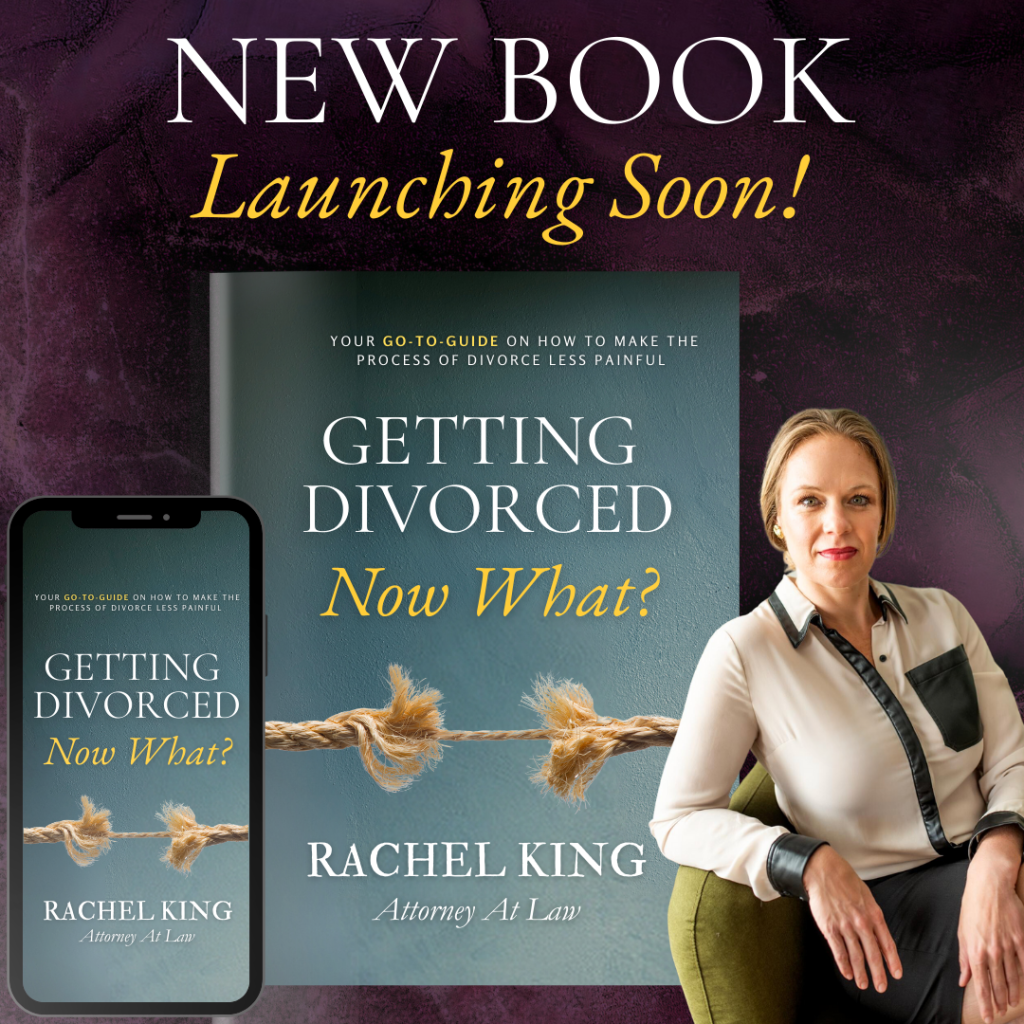
Rachel King Book Launching - King Law Firm Inc. Getting Divorced… Now What? A Q&A with Attorney Rachel King

Getting Divorced… Now What? A Q&A with Attorney Rachel King

Rachel King, lead litigation attorney at King Law Firm Attorneys at Law, Inc., has a new book being released soon. We talked to Rachel about the book, Getting Divorced... Now What? and the challenges one might face when representing themselves during divorce. 1. What is Getting Divorced… Now What? It is everything I have learned over a decade of practicing litigation. It is my attempt to share the inside scoop on divorce in a way that is helpful for individuals facing divorce, which includes case studies, general legal information, tips and tricks—all written without legalese. 2. What Inspired you to write the book? I found that the expectations clients have in a divorce vary hugely but are also unrealistic when compared to the law and are often driven by emotion. This can cause a person to get completely off track and make their case worse. I wanted to share a different perspective, one that many people never get (details attorneys feel are unpopular) attorneys feel the or have to pay a lot of money for (hiring their own attorney). 3. How did you choose the real-life stories included in the book? I’ve watched thousands of people in court—I’ve seen it all. So, I looked at a lot of common scenarios and tried to pick situations that are most likely to be encountered or that illustrate a specific issue in the best way. My goal is to share stories that show ‘you are not alone’ while bringing credibility to the information I am sharing. Of course, the real-life stories included in the book are only based on people and families; the details and the players in each one have been changed. 4. Do the stories offer a comprehensive look at the challenges faced during a divorce? I definitely had to balance comprehensive with taking people down the rabbit hole. (Believe me, I could have written an entire series—and maybe I will!) My goal is to be a helpful resource, not a law school course. Therefore, I focused on what I considered the most common issues, and concepts that are misunderstood, or unpopular realities that no one is talking about in divorce. 5. In your opinion, what is the most influential real-life story in the book? I love the stories that share empowerment. Divorce is hard. Showing that people can have a successful outcome through divorce is important; or maybe even better, can have a successful post-divorce life even if they lose. I really want to show people that the law is different than the dream. Understanding that early can make the process more tolerable. 6. What are some common misconceptions when representing yourself in a divorce? Hands down—that you get special treatment because you don’t’ have an attorney. Not the case. The court may be more patient, but you will be held to the same standards as the attorney sitting across the table from you. This is most difficult when it comes to presenting a case in trial and getting in evidence. 7. What are the top three mistakes people make when representing themselves in a divorce? Making decisions in their own case based on what happened to their friend. Not taking the time to understand the law. Thinking you get special treatment and that the court will let it slide just because you are representing yourself. 8. Does Getting Divorced… Now What? Help readers understand the financial implications of divorce, both during and after? There is definitely discussion about dividing assets, debts, and child and spousal support. Because, let’s face it, divorce causes financial upheaval. But fear not; this is not an economics class, and you don’t have to do math. 9. How can Getting Divorced… Now What? mentally prepare someone for divorce (and to represent themselves through the divorce)? It gives a global understanding of divorce, which can be used as a starting point when preparing for divorce, but it can also be used throughout the process to help focus and review your case so that you remember what you are fighting for. The reality is that goals are going to change throughout the process—and even after—so revisiting this can be very helpful. 10. What was your strategy for putting together the workbook that goes along with Getting Divorced… Now What? The amount of information needed in a divorce can be daunting. The goal of the workbook is to create a free space that can help organize information so that you can look at what the real issues are, what your goals are, and what the argument is. I wanted to provide a space that could be easily accessible and hopefully provide confidence in an otherwise overwhelming and paralyzing process. 11. What is the most surprising thing you learned while putting the book (and workbook) together? It is a lot of work! The biggest challenge was trying to include important and helpful information without it turning it into a dissertation or encyclopedia. It was very hard to say “OK Rachel. It is OK to stop now.” I could have gone on forever. 12. What is you’re the most important piece of advice you can give someone representing themselves in a divorce? Prepare properly. Properly being the operative word. Sign up to King Law Firm’s newsletter to get notified when Getting Divorced... Now What? goes on sale. For more on divorce, check out these posts: 5 Factors to Consider When Representing Yourself in a Divorce Summary Dissolution – Simplified Divorce in California California Divorce in 6 Simple Steps — A Primer

pro se - representing yourself in a divorce gold rings on top of a decree

5 Factors to Consider When Representing Yourself in a Divorce

Complexities aside, representing yourself in a divorce should always be a last resort. We understand not everyone can afford a high-priced attorney, but the inability to separate one’s emotions keeps a lot of people from logical, rational discourse, which inevitably leads to an outcome that’s skewed in the spouse’s favor. However, if you must act pro se (‘pro•say’; meaning to act as your own attorney), consider these five factors. 1. Do Your Research Not all online forms, do-it-yourself guides, and resources are created equal. If you choose to act pro se, do plenty of research into every facet of the process. Legal Terms: You will need to be familiar with many legalities throughout the process, the most important being ex parte (ex•par-tay) communications. These are unsolicited documents, calls, or visits with the judge or clerk, or communications that weren’t transmitted to the opposing attorney. Following the Law: Though some judges are more lenient when representing yourself, they still expect you to follow the law. Be aware of deadlines, courtroom etiquette, correct filing, and rules of evidence. Claiming you didn’t know is never a viable excuse. Communicate: Failing to meet deadlines or respond to paperwork, will always be your fault and may result in a default judgement. Make sure the court, administrator, and spouse’s attorney all have your most recent home address and a professional email account. 2. Custody and Property Representing yourself poorly may affect custody, visitation, support, and property received. Custody: It’s important to know the difference between physical and legal custody, and sole vs. joint custody. You should also understand that agreeing to custody arrangements without considering modification could keep you from changing them in the future. Property Division: It may seem easy enough, but real property has a lot of unknown secrets. For example: if you take your name off the title of your home but not the mortgage, you may still be responsible for payments should your spouse fail to pay. Take this into account for credit card debt and car loans as well. 3. Accessing documents from your spouse How do you subpoena documents? Not knowing how or what documents to collect could lead to mishandled evidence, late filings, and incomplete paperwork. 4. Stay Away from Social Media Social media during a divorce is not your friend. Every post you make, no matter if it’s hidden, may be admitted as evidence. 5. Attorneys cannot provide unsolicited legal advice Some attorneys provide free consultations, but this doesn’t mean they provide free legal advice. Nor does the opposing attorney have an obligation to assist you in any way. Limited Scope Basis: Attorneys may provide this type of representation, in which you pay a small fee for specific tasks, such as filing paperwork. In summary, when acting pro se in a divorce, do plenty of research, stay on top of paperwork, understand the ins and outs of custody and property arrangements, stay clear of social media, and identify all laws required of your state and county.

the cast of Knives Out standing distraught with a judge doing paperwork in the background

Contest a Will – How to Keep From Going "Knives Out"

Knives Out chronicles the mystery behind the death of affluent patriarch (Christopher Plummer). Hidden within Detective Benoit Blanc’s (Daniel Craig) investigation is a family in turmoil – not because of the death itself, but because of how he divided his grand estate in his last will and testament. When it’s discovered that the patriarch has left the entirety of his estate to his faithful nursemaid (Ana de Armes), his kids do whatever they can to convince her to give up the inheritance or steal it in extraordinary ways. This, of course, is not the best way to go about contesting a will. The Correct Way to Contest a Will If the statute of limitations for contesting a will hasn’t expired, you must first petition the probate court (sometimes called a caveat proceeding) evaluated for validity and grounds for contestation so as to invalidate the will and find another way to distribute the decedent’s assets. Keep in mind that contesting a will can be a complex and expensive endeavor (especially if you hire a probate attorney to make sure everything is properly executed), so verify you have all your ducks in a row before beginning the process. Who Can Contest a Will? There are two types of individuals that have standing to contest a will: Beneficiaries—legal adults specifically named in the will, whether it be a family member, friend, charity, or pet. Heirs—individuals who would have a claim on inheritance, such as immediate family, if there was no will upon the decedent’s death or the will was found to be invalid. When Is Contesting a Will a Valid Course of Action? Contesting a will is a valid course of action when you can prove that it was improperly executed. Some reasons why this happens is when: the person creating the will (the testator) didn’t have the mental capacity to understand the contents of the will. a caregiver, family member or friend coerced, manipulated, or pressured the testator into drafting or changing the will (also known as undue influence). Someone forged the testator’s signature. The will lacks the required number of signers, witnesses, and notarizations. There are copious amounts of conditions put on how the inheritance can be received. What Else Should I Look Out For When Contesting a Will? Check with your state and local laws for specific requirements. For instance, in California, family members are all considered interested parties, regardless of whether they are named in the will; and in Texas, individuals with no relationship to the testator may not contest the will. Some states will also accept no-contest clauses or hand-written notes for why assets were distributed in certain ways. Of course, if there is a no contest clause in the will, going Knives Out may be the only remedy. Before you reach that point, though, contact King Law Firm Attorneys at Law Inc. We are ready to fight for your rights and help you navigate the often complicated and time-consuming process. Learn more with Gavels Down, Voices Up - Episode 14: Inheritance Wars: Defending Your Rights and Navigating Contests Episode 5: Last Wills and Family Feuds: Navigating Estate Planning Waters Episode 25: The Messy Relationship Between Death, Divorce, and Your Estate Plan

old woman and daughter touching hands through a pane of glass after isolation - anti-isolation restraining order reverse isolation

Prevent Reverse Isolation Abuse with an Anti-Isolation Restraining Order

When it comes to most restraining orders, laws vary in the way individuals are protected from harassment, stalking, sexual abuse, and other intimidating behaviors. However, there is one threat of potential harm that most states have overlooked—isolation. Reverse Isolation Leads to Abuse Affecting mostly elderly and dependent adults, isolation became prevalent in response to the COVID pandemic. To keep vulnerable individuals protected from acquiring a deadly infection, family members were denied access to their loved ones. The phenomenon of isolating healthy individuals from the public, also known as reverse isolation, or reverse RO, allowed caretakers to abuse their positions and keep elderly and dependent adults isolated based on a perceived threat, regardless of whether isolation was necessary. Those in a position of power could now control, exploit, or take advantage of these vulnerable adults and family members had no recourse against it. California Assembly Bill 1243 Is Signed into Law Because of the unique physical, mental, and emotional harm isolation may have on vulnerable adults, California Governor Gavin Newsome signed Assembly Bill 1243 into law. Taking effect on January 1, 2023, AB 1243 is an extension to the Elder Abuse and Dependent Adult Civil Protection Act. It grants someone with a personal relationship with an elderly or dependent adult the right to seek an anti-isolation restraining order to regain their ability to communicate with their loved ones. Why Is an Anti-Isolation Restraining Order important? The only individuals allowed to seek protective orders before the passage of AB 1243 were the elder or dependent adult or their conservator, trustee, or attorney-in-fact. Allowing for anyone to petition for an anti-isolation restraining order allows these vulnerable adults to maintain important and desirable familial connections and protects them from being abused or neglected. How to acquire an Anti-Isolation Restraining Order According to AB 1243, any interested party—defined as any person with a “personal, preexisting relationship with the elder”—may petition the court for an anti-isolation restraining order. Interested parties must provide evidence that: They have had significant contact (i.e time spent together and proof of a meaningful connection) with the elder prior to isolation; they have repeatedly been denied contact; the elder or dependent desires contact with them; and isolation has nothing to do with the elder’s desire to distance themselves from them. To begin the process, file the California Judicial Council Form EA-100 and/or the Request for Elder or Dependent Adult Restraining Order Allowing Contact (EA-300) with the court. A court date will be assigned within 25 days of the filing. If granted, the anti-isolation restraining order may last for up to five years and can be renewed if necessary. Anti-Isolation Restraining Order Exceptions Unfortunately, no one may seek an anti-isolation restraining order if the elder or dependent adult is currently in a residential or long-term care facility. Please speak with a qualified family law attorney at King Law Firm Attorneys at Law, Inc. if you feel your loved one is being isolated or abused. Check out our most recent episode of Gavels Down, Voices Up!

rumors of divorce two young women spreading rumors in front of a decorative door

Schrodinger’s Divorce – Are Ben Affleck and Jennifer Lopez Calling It Quits?

Screenshot Rumors have been swirling around Hollywood that Ben Affleck and Jennifer Lopez’s marriage is all but over. It started May 17 when Lopez attended the Met Gala alone one day after the two were spotted together at Affleck’s son’s school play. His absence could very well have been due to scheduling obligations on his new film, but that didn’t stop In Touch Weekly from firing the first shot of turmoil. So, how did we get here? When the Romance Started Affleck and Lopez first met in 2002 on the set of Gigli. The movie may have bombed, but their love affair became a blockbuster of epic proportions. So much so, they were labeled “Bennifer”, igniting the trendy pop-culture-name mashup craze. The hottest couple around was engaged later that year, but the spark soon fizzled. After calling off their 2003 wedding (supposedly because of “excessive media attention”), their separation became official in January 2004. Both seemed to move on quickly, though. Lopez married Marc Anthony in 2004; a year later, Affleck married his new girlfriend, Jennifer Garner. Relationships Crumble Lopez and Anthony were the first to call it quits, ending their marriage in 2014. Affleck and Garner lasted another four years before their divorce was finalized in 2018. Both then moved on to new suitors for a brief period. But as Affleck’s flirtation with Ana de Armes fizzled and Lopez’s engagement to baseball phenom Alex Rodriguez ended in 2019, the door was finally open for Affleck and Lopez to rekindle their tabloid flame. A Second Chance at Love The Bennifer hurricane swept through the rumor mill once again when Affleck and Lopez separately attended the Vax Live concert. They were then spotted together several times over the next few months. Their newfound love quickly flourished into another engagement, this time culminating in marriage at a 2022 Las Vegas ceremony at the A Little White Wedding Chapel. What About Their Kids? Even though Affleck and Anthony only have visitation rights to see their kids, both Affleck and Lopez share joint legal custody with their respective exes, and all parties feel the same when it comes to the health, safety, and education of their children. An US weekly source has stated, “They have a mutual respect for each other as parents and know how well all their kids get along. They want to foster and nurture those relationships and will do whatever it takes to show their support.” What now? Neither Affleck nor Lopez has confirmed or denied these rumors. That hasn’t stopped sources from revealing the couple doesn’t see eye-to-eye on parenting and finances, nor does it negate the fact that Affleck has moved out of their home. It doesn’t help, either, that Lopez canceled her This Is Me… Live tour, citing the need to spend more time with her family to be “absolutely necessary.” This still isn’t enough to know if the marriage is over. Until an official announcement is released, we can assume this is nothing more than a Schrodinger’s cat situation — Affleck and Lopez are both happily married and filing for divorce.

KLF king law firm conservatorship for disabled children 1 - King Law Firm Inc. Conservatorships for Disabled Children

Conservatorships for Disabled Children

In most states, the terms “Guardianship” and “Conservatorship” are one and the same; interchangeable. California, however, has a very clear distinction between the two. A guardian is someone who takes care of a child under the age of 18 when the child’s parents are deceased or incapable of properly caring for the child. A conservator, on the other hand, is someone who must take care of certain aspects of a child’s life once they turn 18 (or become a legal adult) because they are developmentally disabled. Developmental Disability Being developmentally disabled means the individual has been diagnosed with an ongoing disability (i.e. autism, cerebral palsy, or epilepsy) prior to turning 18. Some disabilities excluded as reasons for setting up a conservatorship include brain trauma, depression, and anxiety disorders. Types of Conservatorships There are two types of conservatorships: general and limited. A general conservatorship strips the disabled person of all individual autonomy. Basically, it eliminates their civil and legal rights, removing their ability to make decisions on everything from finances, healthcare, and education. In a limited conservatorship, the developmentally disabled individual retains most of their civil and legal rights. Instead, the court appointed conservator may only have control over specific aspects of the person’s life, which may include the individual’s living arrangements, ability to access confidential records and enter into contracts, social and sexual relationships (including marriage), healthcare, and education. The Dangers of Conservatorship The goal of a conservatorship is always to appoint a trustworthy, responsible person as conservator. However, because anyone over the age of 18 can become a conservator, this isn’t always the case. Half of all conservators in the U.S. are strangers, usually someone from the California Department of Developmental Services or a paid professional. Also, if a conservator dies, the judge will select a new conservator regardless of who the deceased conservator may have wanted to succeed them. Because of this, conservators may easily take advantage of the conservatee, whether financially, emotionally, or physically. Though there are safeguards when it comes to finances, many people still find ways to exploit the conservatee for financial gain. Conservatorships also do not protect against sexual or physical abuse, nor do they offer protection if a conservatee is arrested. Minor Conservatorships Though conservatorships in California are generally meant for adults, there are a few exceptions. When both biological parents die, a guardian will be appointed to care for the child’s health, education, and general well-being, but a conservator may be appointed to care for the minor’s financial estate, especially if they receive certain assets and property as part of a will or trust. A conservator may also be setup for a minor if the child needs specialized care the parents are unable to provide. With all of this in mind, conservatorship should always be a last resort. Setting up a power of attorney or hiring an advocate for decision-making may be better options for your specific circumstances. Call King Law Firm Attorneys at Law, Inc. to discuss your options.

cracked wedding rings on top of divorce papers signaling summary dissolution

Summary Dissolution – Simplified Divorce in California

Your decision to file for divorce is tough enough. The last thing you want to deal with while figuring out your new life is a ton of documents, mediation, and court proceedings. Lucky for you, if you live in California, you may qualify for another option – summary dissolution. What is a Summary Dissolution? Summary dissolution is a simplified, less expensive process for divorce or legal separation. How Do You Qualify for Summary Dissolution? The process may be faster, however, there are stringent requirements that must be met to qualify for summary dissolution. First and foremost, the separation must be uncontested, which means both parties agree that the marriage is ending due to irreconcilable differences and to the division of property and assets. Each party must also waive any right to spousal support. Several additional requirements must also be met include: The separation date must be within five years of the date of your marriage. The couple must not have any children together, nor can either part be pregnant. The couple may not own property or land together and may not have debt that exceeds $7,000 (except for car loans). Assets owned by each party may not exceed a net worth of $53,000 together (from the date of marriage) or separately (before the marriage). Except for your primary residence, parties may nat have a rental agreement for land or buildings. If any of the above conditions are not met, you do not qualify for a summary dissolution. Your Guide to Summary Dissolution If you do qualify for summary dissolution, the Summary Dissolution Information booklet ( FL-810) is required reading—you will need to sign under oath that you’ve read it. This booklet details everything you will need, including documents and worksheets that must be completed. Important Information to Know Financial Forms Both parties must complete the following financial disclosures: Income and Expense Declaration ( FL-150) Declaration of Disclosure ( FL-140) Schedule of Assets and Debts ( FL-142) or a Property Delaration ( FL-160) Each spouse will then swap these forms along with tax information and additional investment and business disclosures. Court Filings Once the financial information is complete, you’re ready to fill out and sign the settlement agreement found in the Summary Dissolution Information booklet. This form, along with a Joint Petition for Summary Dissolution ( FL-800), a Judgement of Dissolution and Notice of Entry of Judgement ( FL-825), and your property agreement (a detailed explanation for the division of assets) must then be filed with the court. Deliver two copies (along with the original) to the court clerk and pay the required $435 filing fee. (If you receive public benefits or can prove hardship, you may be able to waive the fee.) Additional local or county forms may also be required. That’s it. There are no court hearings to finalize the divorce. If you have questions, or need assistance with any of the summary dissolution documents, contact King Law Firm Attorneys at Law, Inc.

california divorce process king law firm attorneys jpg 1 - King Law Firm Inc. California Divorce in 6 Simple Steps — A Primer

California Divorce in 6 Simple Steps — A Primer

Divorce is never easy. Along with the emotional strain, dealing with all the forms, procedures, and rules required to file a divorce in California can become overwhelming. Understanding the basic process can help mitigate the stress. Step 1: Prepare to File for a California Divorce The first thing you want to do is inform your spouse about the divorce in person. If doing so is impossible, send an email, or call. Blindsiding your spouse may affect your case down the line, especially when it comes to agreeing to the division of property and support. If you have children, talk to them about what’s happening and give them time to ask questions. Answer honestly and never disparage or speak badly of your spouse. Once all parties are aware of the divorce, collect your passport, birth certificate, insurance policies, bank statements, and any other important documents. Step 2: File Initial Documents Now that you’re prepared, it’s time to file the paperwork. To initiate divorce proceedings, you must be a resident of California for at least six months and a resident of the county for at least 3 months. If this residency requirement is met, fill out and file a petition and a summons with your local courthouse, along with the required $435 filing (or “first appearance”) fee. If you have children under 18, a Declaration under Uniform Child Custody and Enforcement Act (UCCJEA) will also need to be filed. Step 3: Deliver the Documents to Your Spouse Once the paperwork is properly filed, ask a friend, contact the sheriff’s office, or hire a licensed process server to deliver, or serve, the papers to your spouse, who will then have 30 days to file a response. You cannot serve the paperwork yourself. It must be a third party over the age of 18. After they’ve served the papers, ask the third party to file a Proof of Service of Summons with the court as proof they were delivered. Step 4: Share Your Finances Within 60 days of filing the petition for divorce (or filing a response), California fiduciary laws dictate that you must fill out a Declaration of Disclosure, an Income and Expense Declaration, a Schedule of Assets and Debts, and a Property Declaration. Step 5: Make Decisions About Finances, Property, and Children Through the process of discovery (the obtaining of documents and asking questions under the penalty of perjury), you and your spouse will come to terms with the division of assets, property, and childcare. If for whatever reason, a mutual consensus becomes impossible, mediation or a court hearing may be necessary. Step 6: File the Final Forms To finalize your California divorce, you will file a set of final forms. These vary depending on whether written agreements or support orders are included. If all information is accurate and complete, a judge will sign off on the divorce. There is a six-month waiting period before this final judgement is filed. If you have any other questions or concerns, feel free to contact King Law Firm Attorneys at Law, Inc.

Contact Us

Fill out this form below and we'll contact you shortly
*Required Fields